Published October 8, 2026
Choosing pole lengths for tall orchard shakers
Match your orchard tree height to standard or six-meter carbon fiber shaker poles to eliminate ladder work safely.
Traditional manual fruit harvesting accounts for 50% to 70% of total production cost across orchard operations. Hiring seasonal crews to pick mature trees year after year consumes the largest single share of your annual operating budget. When you run 20 to 80 hectares of olive groves or mixed orchards, relying entirely on hand labor leaves your margins vulnerable to rising wages and labor shortages.
- Manual picking takes 50% to 70% of total production cost.
- Climbing ladders to reach high branches creates serious fall hazards during the narrow harvest window.
- Multi-section joint poles let one operator stand safely on the ground and clear tall canopies.
- Standard 1.1-meter poles suit low-density shrubs, while extended 6-meter poles reach the tops of mature trees.
Why manual harvesting of tall canopy trees accounts for seventy percent of labor costs
Hand harvesting requires large crews to spend weeks moving ladders, pulling fruit by hand, and hauling filled crates from the orchard floor. According to data reported by Washington State University, labor represents 50% to 57% of variable orchard costs, while other industry analyses place labor between 60% and 70% of variable costs for fruit production. Wages for skilled pickers climb every season, yet human output remains bound by physical endurance. When your trees mature and canopies widen, the time required to hand-strip every branch multiplies, driving labor overhead to its upper limit.
The safety and efficiency risks of climbing or using makeshift ladders during peak harvest windows
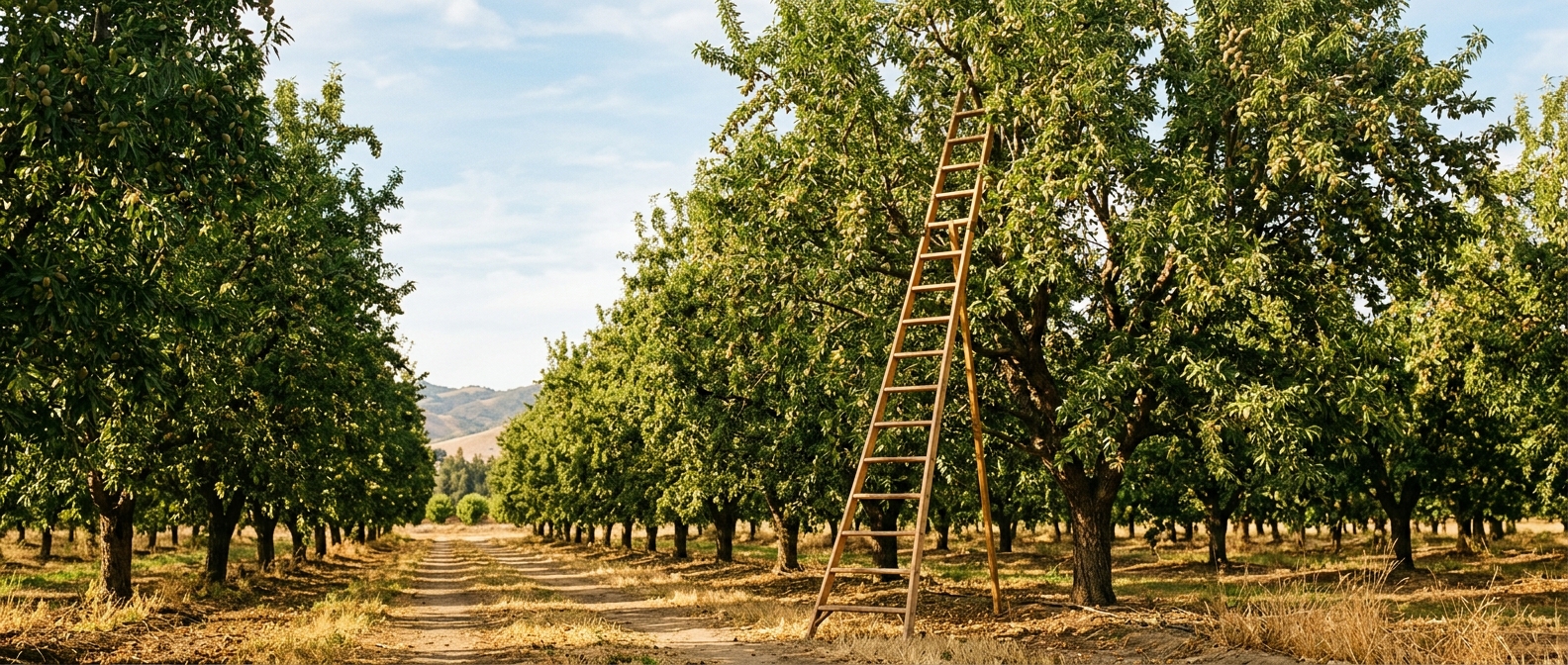
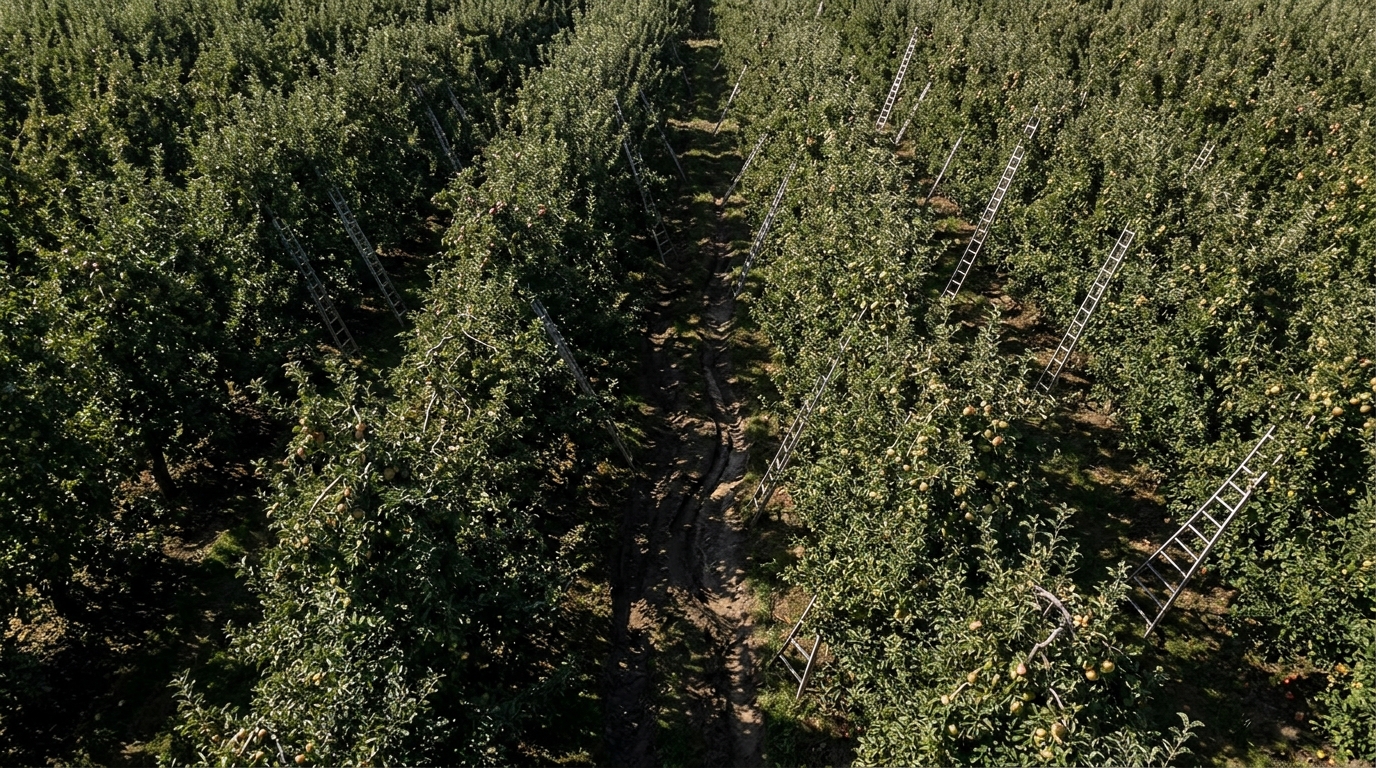
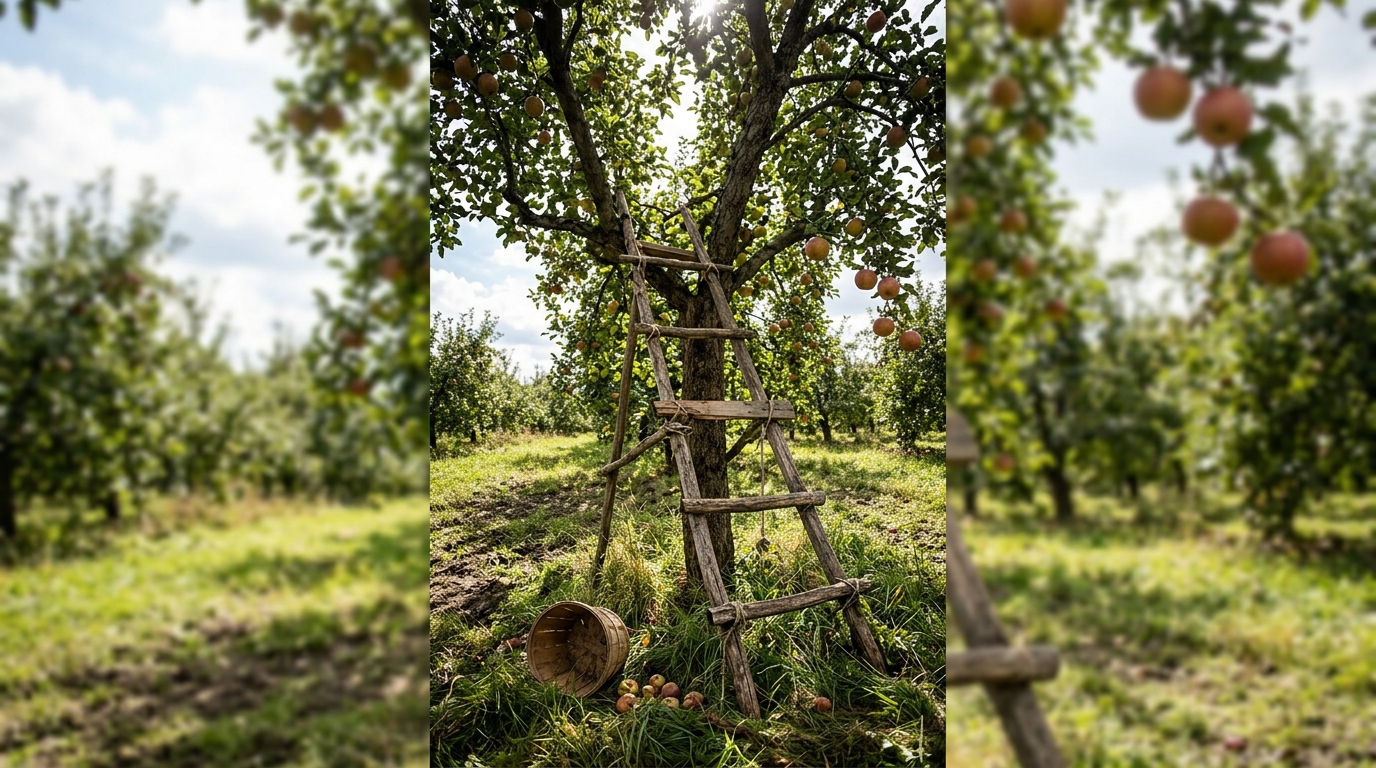
Reaching the upper branches of mature trees forces workers onto wooden ladders propped against uneven orchard soil. Every hour spent working at height increases the risk of falls and injuries during the busiest weeks of the year. Beyond safety hazards, climbing slows down the harvest. A worker must stop picking, descend the ladder, move it two meters down the row, and climb back up to clear the next section of canopy. As noted by Carbon Fiber Telescopic Pole, hand-held picking rods reduce the danger of high-altitude picking while clearing fruit more accurately and quickly than hand crews on ladders.
How multi-section joint poles transmit torque through dense branches on mature trees
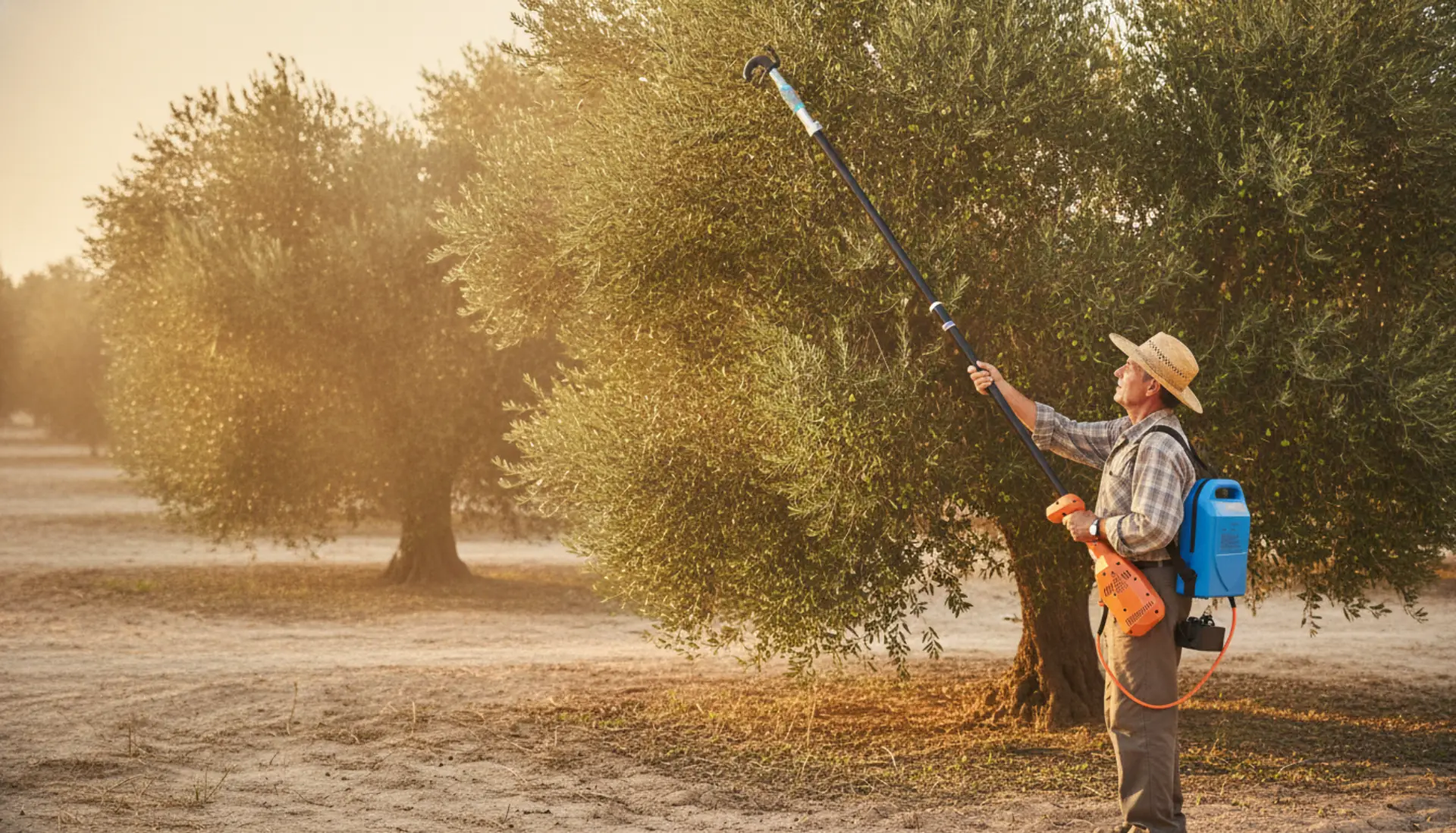
To shake fruit from thick, woody branches without climbing, an electric harvester relies on a rigid jointed pole that channels motor vibration directly into the canopy. The C Series extended-reach mechanical tree shaker uses a 1200 W high-torque motor running at 0 to 1500 vibrations per minute, delivering force through a carbon fiber and aluminum alloy structure. Unlike a flimsy telescoping tube that bends and absorbs energy, a modular jointed pole locks sections together to maintain torsional rigidity. When you apply the padded harvesting head to a high branch, the motor's 30 to 80 mm adjustable amplitude transfers straight into the fruit cluster, causing ripe olives or nuts to release cleanly without tearing the bark.
What a six-meter carbon fiber pole reaches that a standard one-point-one-meter pole cannot
A standard 1.1-meter picking pole on an A Series machine works well for low shrubs and dwarf plantings, but it leaves the upper half of a tall orchard tree completely out of reach. Attempting to harvest tall trees with a short pole forces you back onto ladders. The C Series multi-section joint pole offers configurable lengths of 1.5, 3.0, 4.5, and 6.0 meters, giving a single operator standing on firm ground full access to the highest scaffolds of mature olive or walnut trees. You can configure the pole length to match your specific canopy height, eliminating ladder work entirely across large-area orchard harvesting.
How to evaluate whether your orchard requires a standard electric picker or an extended reach mechanical shaker
Choosing the right machine comes down to measuring your tree height and canopy structure. If your trees are maintained below two meters in a high-density hedgerow or shrub layout, the A Series portable picker with its 300 W motor and 1.1-meter aluminum pole provides a light, single-hand tool rated for 10 to 12 hours of operation on a single 24 V 30 AH lithium battery. For medium-to-tall trees requiring higher output, the B Series enhanced harvester delivers 600 W of power with pole options up to 1.8 meters. If your orchard features mature trees with high canopies stretching past four meters, you need the C Series extended reach shaker to clear the upper branches from the ground. Every unit undergoes power testing, vibration testing, and safety inspection before shipment, and carries a 12-month warranty backed by full spare parts supply and technical support through our service warranty page. Matching the pole configuration to your actual tree structure lets a single operator replace multiple ladder-bound workers and cut harvest labor time significantly across your acreage.
Sources
- Hand harvest accounted for 46% of the total annual variable costs for a cider apple orchard in full production in western Washington.
- Labor accounts for between 60% to 70% of variable costs for apple growers.
- Labor represents 50% to 57% of orchard variable costs for Washington state apples.
- The hand-held picking rod reduces the danger of high-altitude picking, and can pick fruits more accurately and quickly.