Crops·what releases, and what will not
A shaker does not pick fruit. It persuades the branch to let go.
Whether that works is decided before we are involved: by the fruit, by the stem, and by how ripe the crop is on the day. So this page is not a list of crops we sell into. It is the reasoning — so you can work out whether your crop is one of them before you call us.
The six we have written up
The crops we have gone through properly.
Each of these has its own page: what makes the harvest hard, what the machine is set to for it, and where shaking stops working on that crop. The other crops the manufacturer names are listed below them.
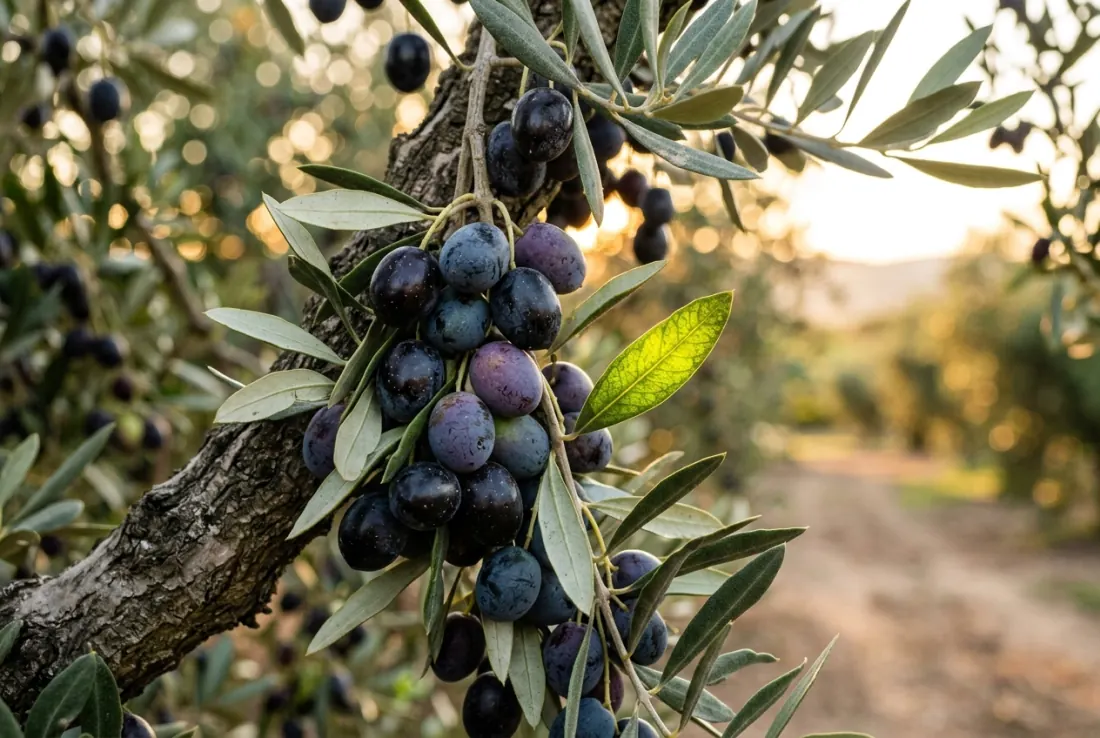
Olive
Mediterranean basin, the Middle East, California, Australia. Broad canopies and a harvest window of a few weeks — a grove that cannot find pickers in time loses the oil, not just the fruit.
Coffee
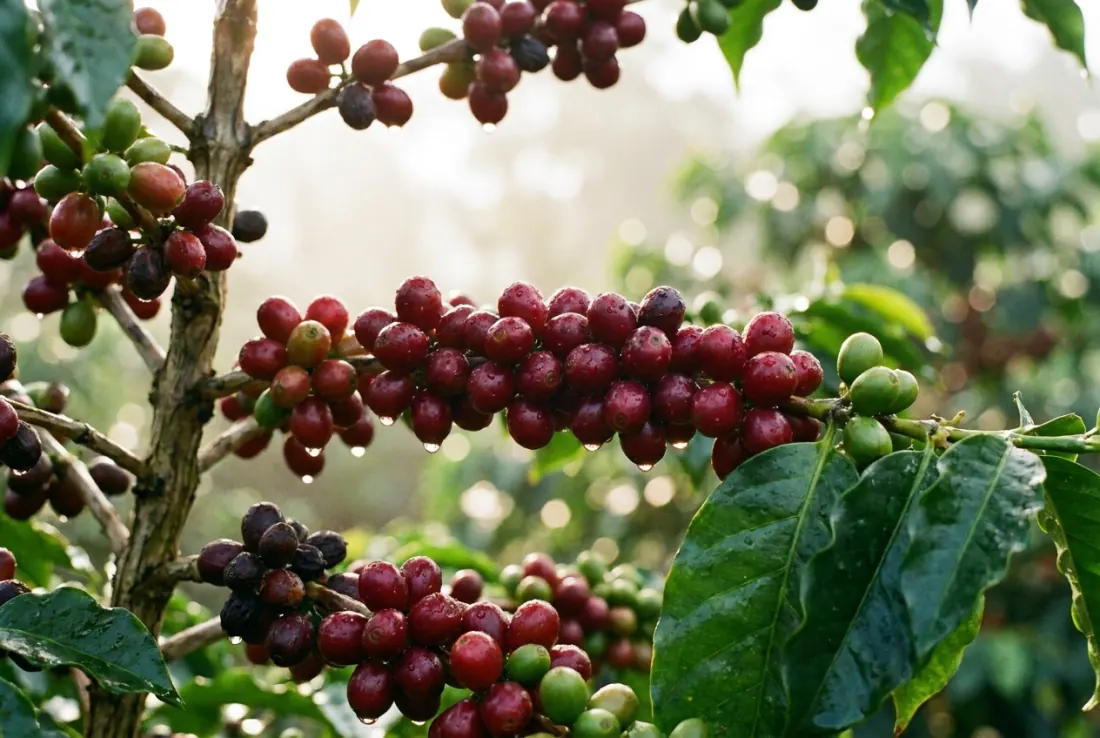
Ripens one cherry at a time, so the question is not whether it can be shaken but how much green comes down with the ripe.
Seabuckthorn
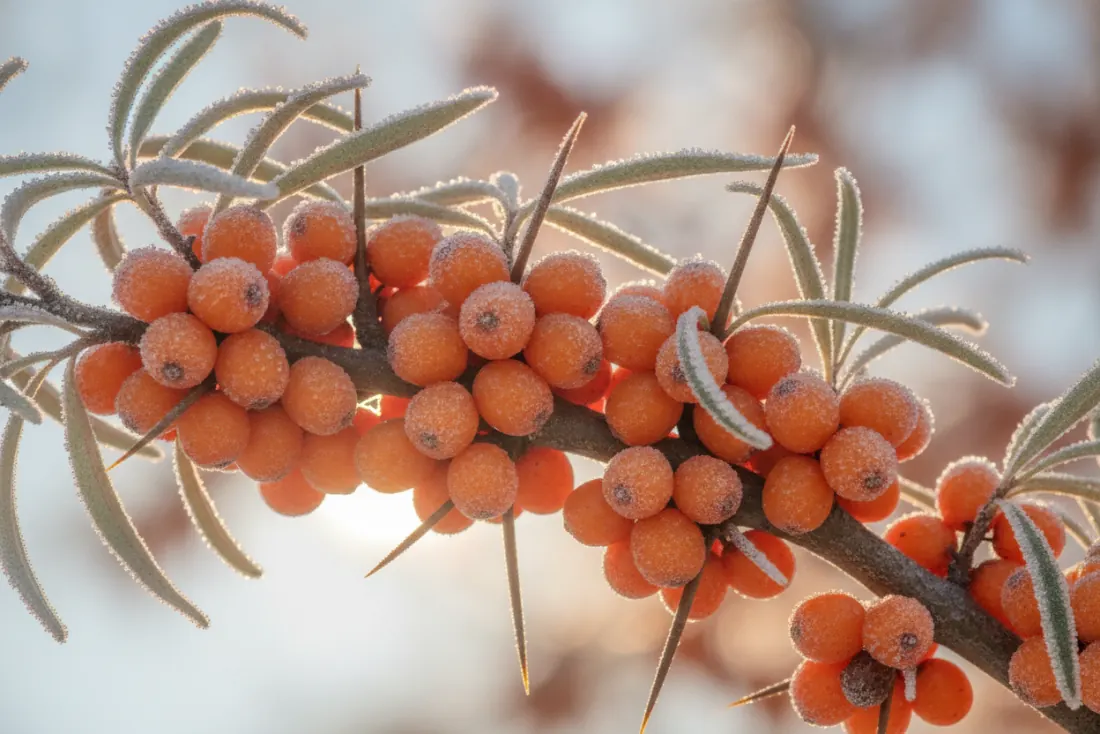
Thorny, dense, and picked in the cold. The crop where a machine that still runs at −20 °C changes what is possible at all.
Cornel
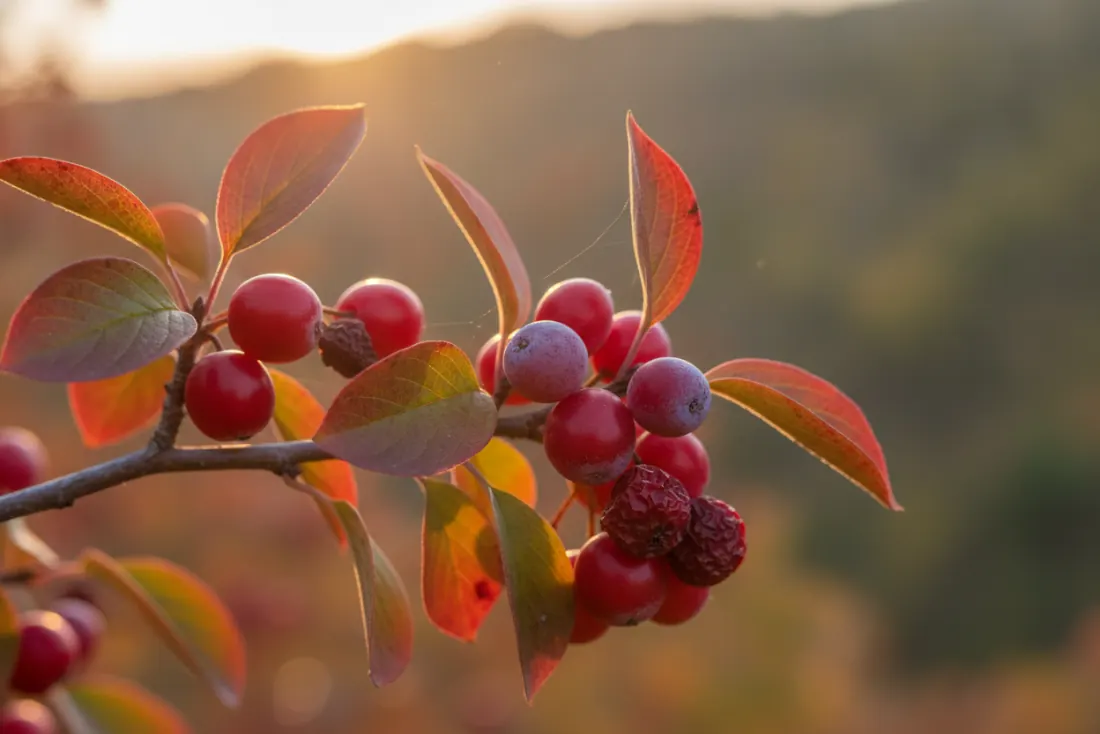
The crop this range was built around, in large-scale use across Henan, Shaanxi, Shanxi and Anhui for over ten years.
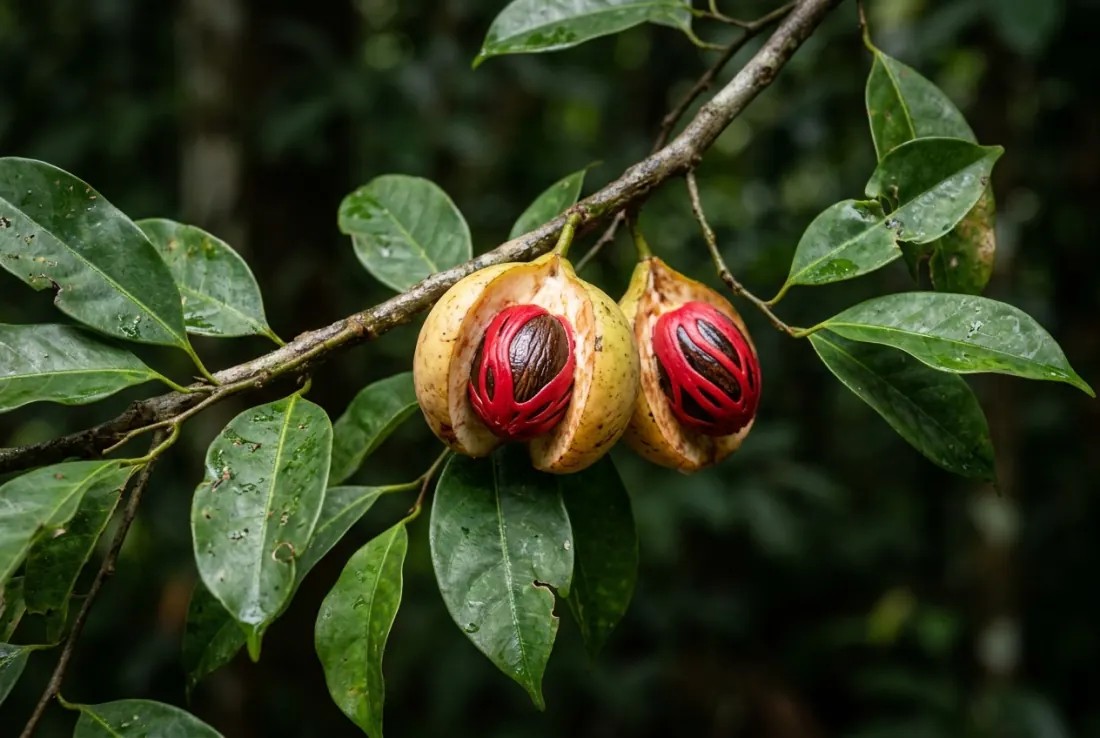
Nutmeg
Penang and Johor. Picked from the tree, on a short window, and easily marked — a crop where the setting matters more than the power.
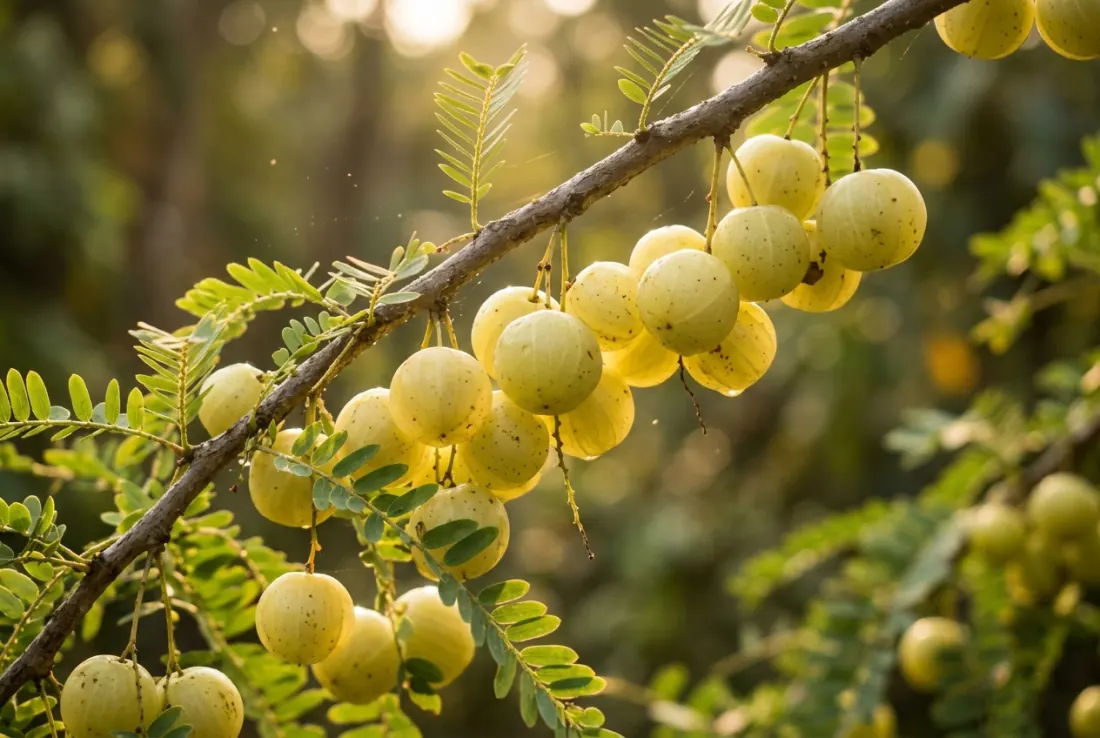
Amla
India grows most of the world crop. Dense, firm fruit on fine branches: the case where low amplitude counts for more than force.
The manufacturer names these as crops the machines are used on. We have not written a page for any of them yet, so we are listing them rather than implying a page exists: wolfberry, hawthorn, jujube and wild jujube, pistachio, apricot and wild apricot, walnut, plum, cherry, honeyberry, waxberry, mulberry, chestnut, star anise, green plum, kumquat and camellia oleifera. If one of these is your crop, ask — we will tell you what we know and what we would need to check.
How it actually works
Four things decide whether shaking is your answer.
This is the part most supplier pages leave out, because it is the part that sometimes ends in a no. It is drawn from published harvest research rather than from our own brochure — and the numbers below come from trials on tractor-mounted tree shakers, which are a different class of machine from ours. We say which is which.
- 01
The fruit has to want to let go
Shaking works because a ripe fruit is already halfway detached. The force needed to pull fruit off falls as the crop ripens, and published work on olive gives different correction factors for different ripeness stages — the same machine needs a different setting on a half-ripe crop than on a fully ripe one. That is the technical reason the frequency on our machines is adjustable, and why we ask what stage you will be picking at rather than only what you grow.
- 02
More force is not more fruit
Frequency is a trade-off, not a knob to turn up. In the published trials, high frequencies concentrate the energy near the point being shaken and transmit less of it into the branches and canopy, so less fruit comes off; low and medium frequencies spread the energy through the tree but put more of it into the roots and soil, which is the tree's problem rather than the season's. Finding the frequency is the job — not applying the maximum.
- 03
Why this machine is 1 kW and a tree shaker is 13 kW
Published measurements on a tractor-mounted trunk shaker give about 13 kW of predicted power, 18 Hz and roughly 12 seconds per tree, removing around 90 % of the fruit. Our machines are 0.3 to 1.2 kW — one to two orders of magnitude smaller. That is not a weakness, it is a different job: a trunk shaker needs a straight trunk of about 0.6 to 1 m below the canopy to clamp onto. Old, gnarled trees and terraced groves do not have one. Working branch by branch, with a machine one person can carry, is how those trees get harvested at all.
- 04
And then there is the crop that ripens a berry at a time
Coffee is the honest example. The cherries on one branch do not ripen together, and the difference between picking only the ripe ones and taking the whole branch is the difference between specialty quality and commodity quality. Shaking is a stripping method. Ours can be set to low amplitude and short contact to bias towards the ripe cherries, and that is a real improvement — but it does not turn coffee into a selective harvest, and any supplier who tells you otherwise has not read the same research.
Four questions
Ask these in order. The first no ends it.
If you can answer the first three, you already know more about your harvest than most of the catalogues you will read. Send us the answers and we will tell you which machine, or that none of them is right.
- Does the fruit come off when the branch moves?
- Not the same as "is it ripe". Fruit that is cut from the tree, pulled off by the stalk, or picked berry by berry is not a shaking crop, however ripe it is. If you are not sure, shake one branch by hand and see what falls.
- Is the fruit on wood a head can reach?
- A shaker works on the branch or the limb, not on the fruit. So the question is whether the fruiting wood is exposed enough to lay a hook or close a clamp on it. Trees so dense that you cannot see the branch are a no, whatever the crop.
- Can the crop take the fall?
- Shaking brings fruit down in a shower, not into your hand. Fruit that bruises on impact is a poor fit unless you are catching it — which is what the collection umbrella is for. Thin-skinned crops want a low setting and a soft landing, not more power.
- Can you get the machine to the tree?
- A portable shaker is the only way into some groves — but it is still a machine in your hands, on a pole up to six metres. Steep, loose ground where you cannot keep footing is a real limit, and so is a block with no way in at all.
Where shaking stops
The crops where we say no, before you ask.
Every one of these has come up in a real enquiry. Saying no costs us the order and is still the right answer, because the alternative is a buyer discovering it after the machine has shipped.
- Pepper for cuttings — Sarawak pepper is cut spike by spike. Shaking it is not a thing, however convenient it would be for us to claim it.
- Oil palm fruit bunches are cut with a sickle. Not shaken.
- Durian, cocoa and mango are picked by hand or cut; shaking bruises the fruit.
- Timber, conifers and anything grown for wood rather than fruit.
- Crops that must be picked selectively by grade, where the fruit will not release one grade at a time. No shaker solves this — not ours, not a 13 kW one.
- Blocks with no way to get a machine in. If a tractor cannot reach it and two people cannot carry it up, we cannot help.
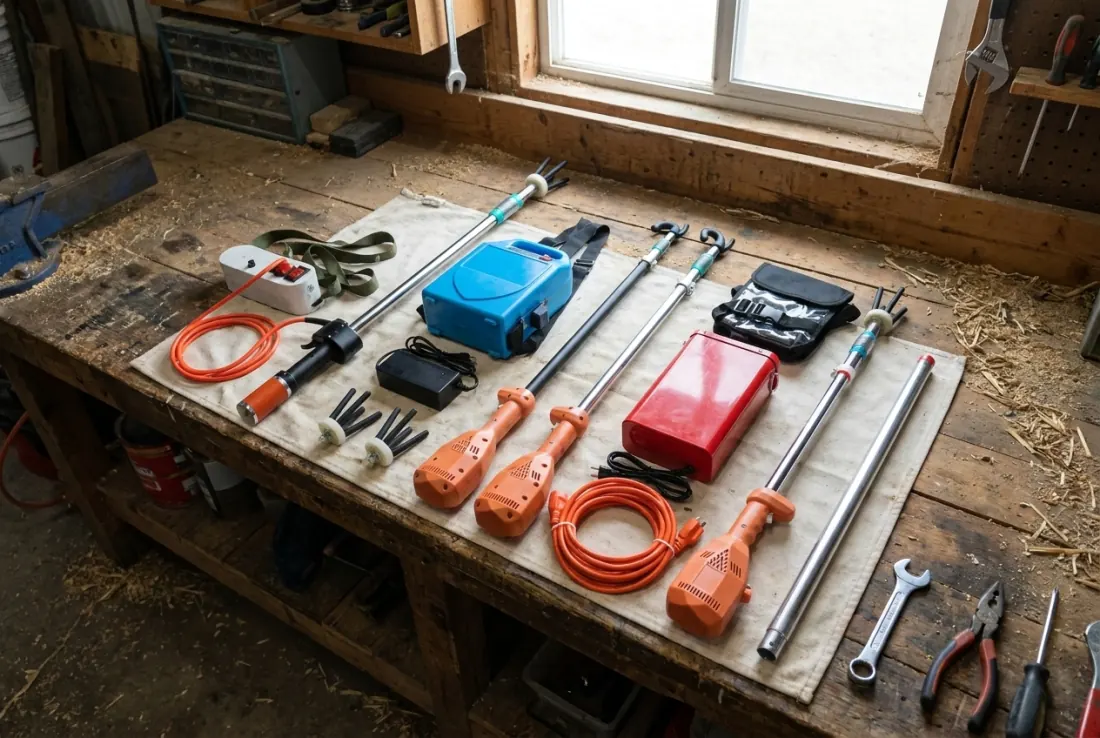
Service & parts
The parts that wear are the parts we keep on the shelf.
Claw heads, batteries, cables and trigger modules are the four things that wear out. We keep all four in stock, ship them by air, and send the video that shows the swap — most swaps take a single spanner and under ten minutes.
- 12-month warranty on the machine, 6 months on the collection umbrella
- Claw heads, batteries, cables and trigger modules held in stock
- Remote diagnosis by video call, in the language you write to us in
- OEM and ODM: your colour, your brand, your packaging from 50 units
- Minimum order 10 units · 15–30 days production · samples available
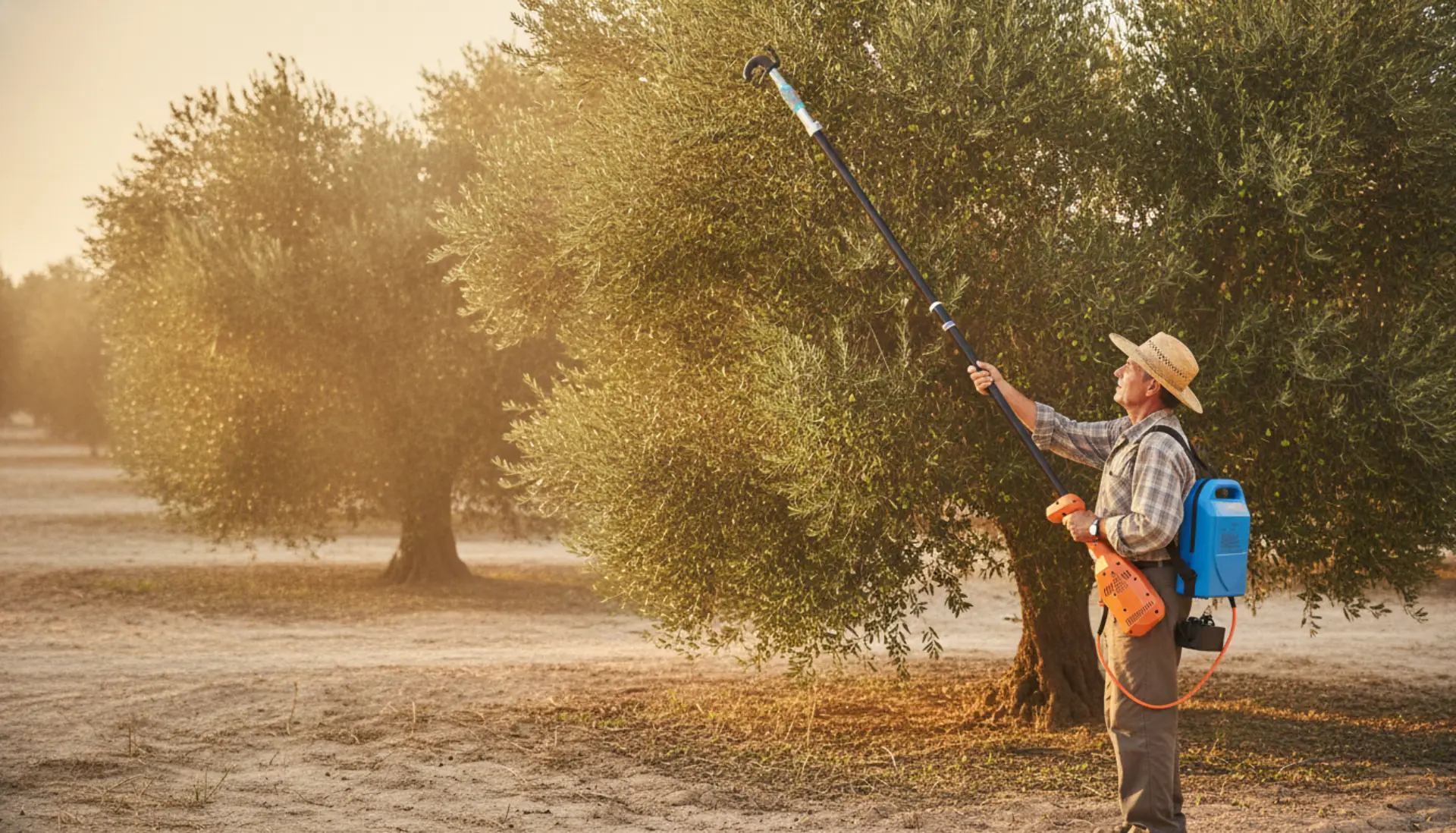
Tell us the crop, the tree and the ground.
Give us the crop, the tree height, the slope and what you use today. You get a straight answer on which series fits, what it will cost delivered, and the parts list — or an honest no if the crop is not one we can shake.
What we need from you
- Crop and variety
- Tree height and habit
- Slope and access
- Your current picking method