Series C·the long one·1200 W·to 6 m
Six metres, from the ground. Nobody climbs the tree.
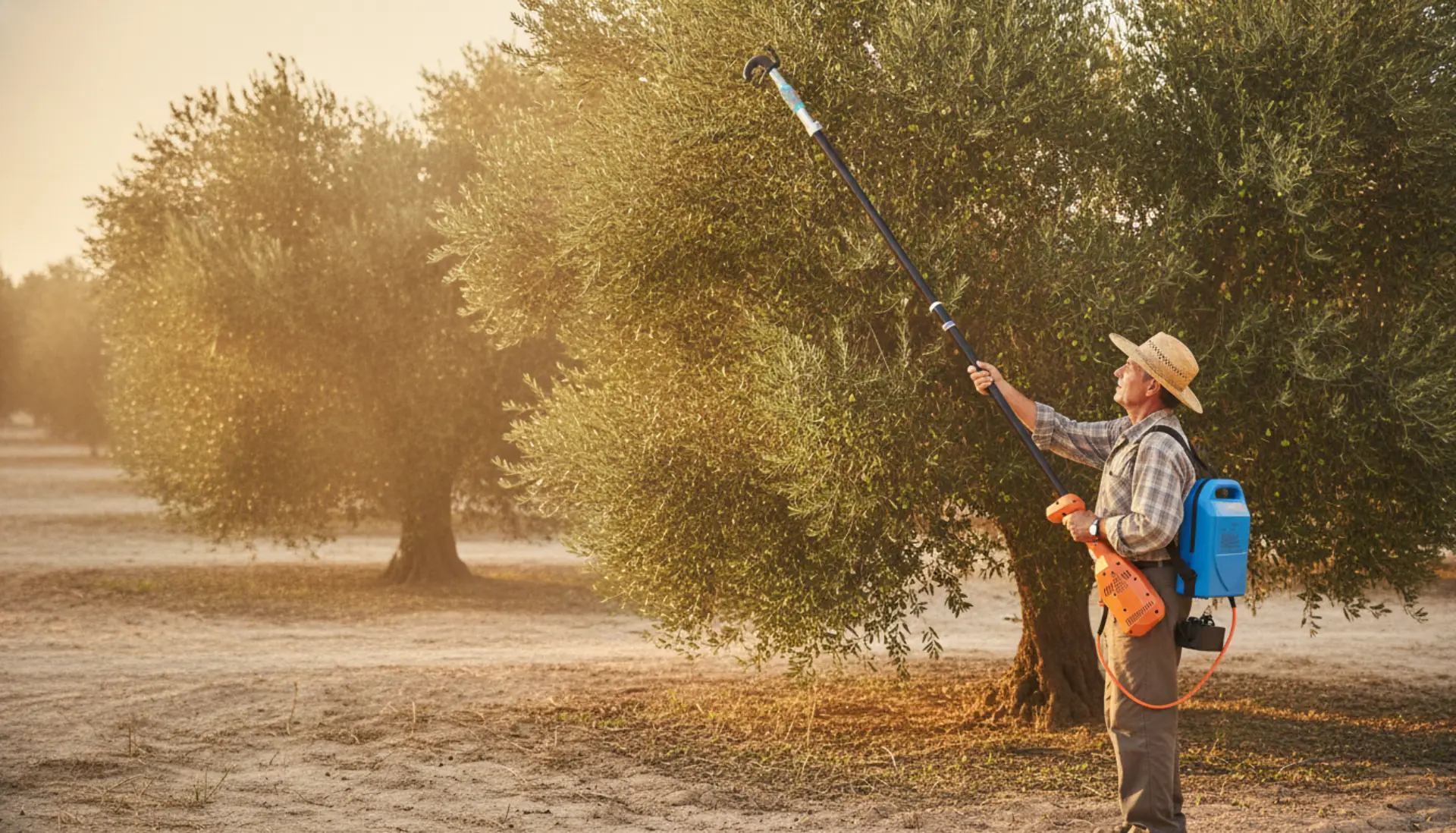
The fruit at the top of an old tree is where the money is and where the accidents happen. Series C is built for that end of the orchard: four pole sections you assemble only as far as each tree needs, up to six metres, with the head clamped onto the limb instead of poked at it.
- Pole
- 1.5 / 3.0 / 4.5 / 6.0 m, jointed
- Motor
- 1200 W high-torque
- Vibration
- 0–1500 /min
- Battery
- 24 V / 36 V · 30 / 40 Ah
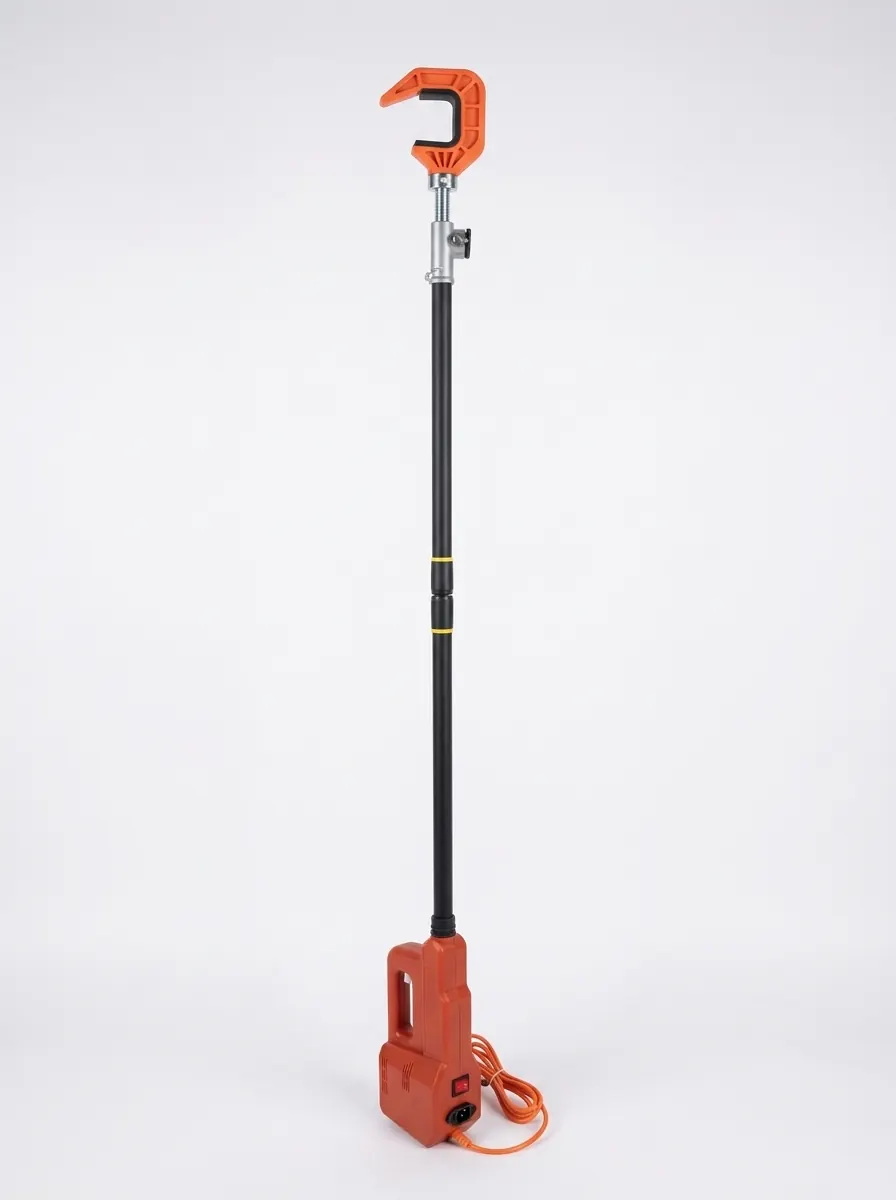
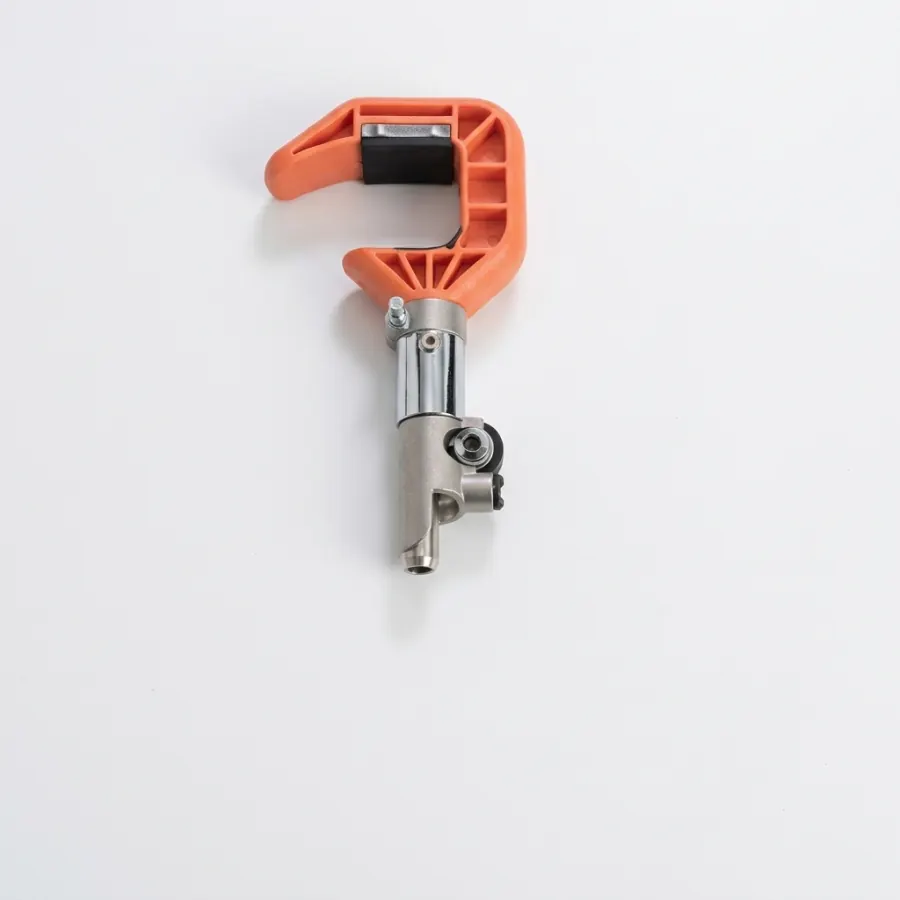
The head it ships with
The C-clamp. It closes on the limb and holds it.
Series C ships with the orange C-clamp. Like the other heads it is a quick-change part — one spanner at the pole tip, in the field — and which head you get is set by your crop rather than by the model number; the three heads are on the range page. What the clamp does is close around the limb with a rubber pad in its jaw and hold it. At six metres you are not placing a head under a branch you can see; you are working by feel, and a clamp that has already closed on the wood will not slip off while the machine is running. That is also why it takes 1200 W and a slower 0–1500 a minute: force applied through a held limb, not speed tapped at a branch.
The machine
Four sections. Carry it in, build it at the tree, take it down.
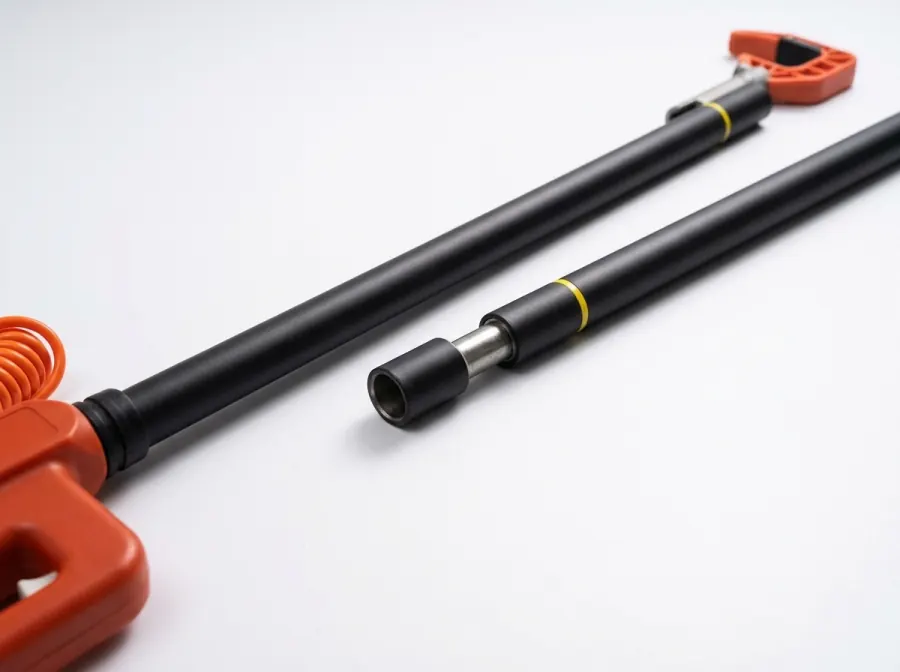
The pole is not one six-metre tube — it is sections that couple end to end, with a yellow identification ring at each ferrule. A tree at four metres gets three sections; the old one behind it gets four. Between trees you take sections off rather than walk around with a six-metre pole over your head.
Close up
The three parts you touch every day.
Nothing below is a render or a mock-up. Each is cut 1:1 out of the manufacturer's reference photograph of this machine, so what you see is what arrives.
The C-clamp head
An orange clamp with a rubber pad set into its jaw, on a short chrome neck with a bolt clamp and a spigot below. It closes on the limb — the reason this head is the one that goes on the long poles.
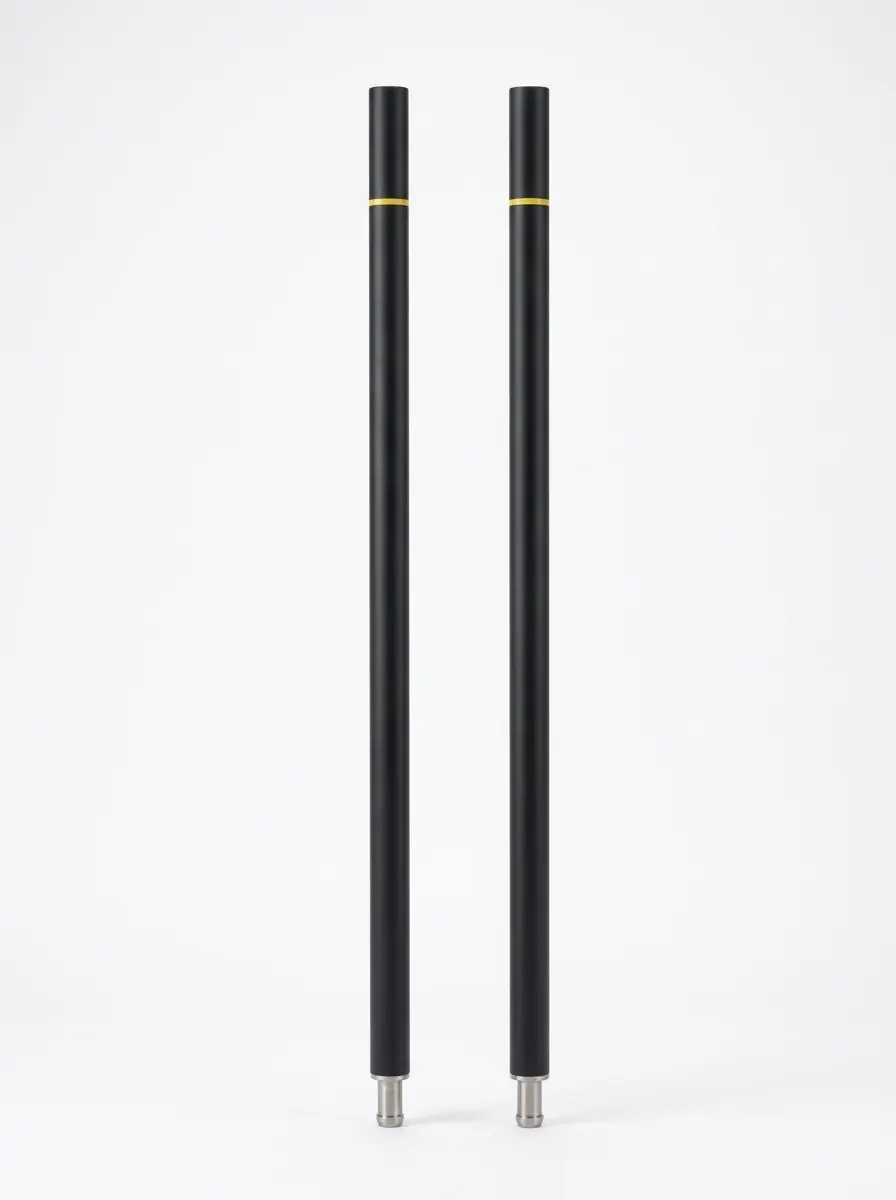
The sections and their ferrules
Matte black tubes with a thin yellow ring at each ferrule and a bare metal spigot at the bottom. The ring is not decoration: it is how you tell a 1.5 m section from a 3.0 m one when they are lying on the ground together.
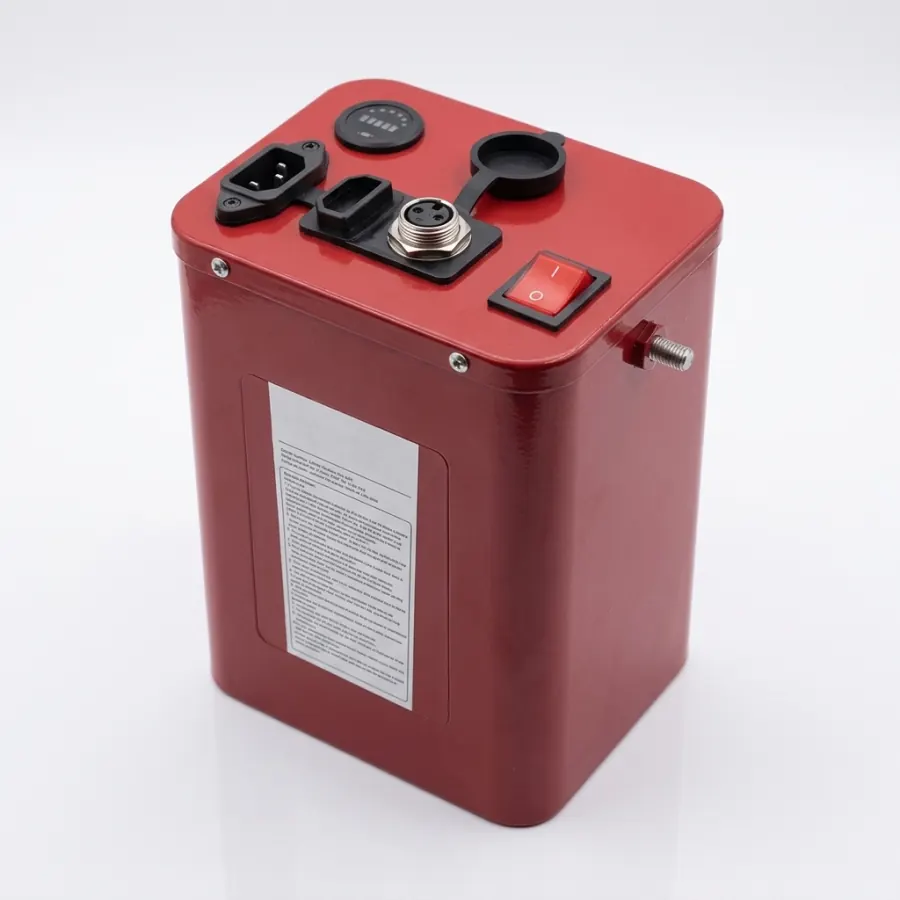
The battery box
A red box with the rocker switch, the round charging socket and the charge-level indicator on the top face, and a woven shoulder strap. 24 V or 36 V, 30 or 40 Ah, 4–6 hours to charge.
Full specification
As published by the manufacturer. Rated runtime is a rated figure, not a measured continuous full-load time. One conflict is worth naming: a Spanish-language version of the manufacturer's own page describes this machine as suitable for small and medium farms, while the English page says tall fruit trees and large-area orchards. We go with the English page — a 6 m jointed pole is a different purchase from a small-farm machine, and the buyer should hear it described the same way the manufacturer's primary market does.
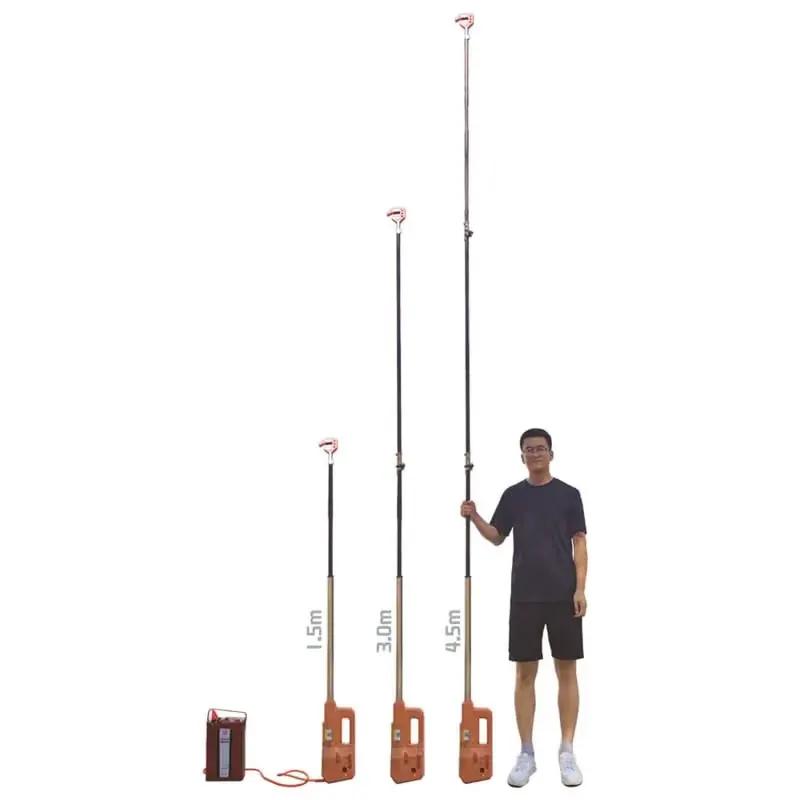
| Pole length | 1.5 m / 3.0 m / 4.5 m / 6.0 m |
|---|---|
| Pole material | Carbon fibre and aluminium alloy |
| Body material | Engineering plastics with metal components |
| Motor | 1200 W high-torque |
| Vibration frequency | 0–1500 /min, adjustable |
| Vibration amplitude | 30–80 mm, adjustable |
| Battery | 24 V / 36 V lithium, 30 Ah / 40 Ah (optional) |
| Runtime (rated) | 10–12 h |
| Charging time | 4–6 h |
| Noise | < 80 dB |
| Operating temperature | −20 to 50 °C |
| Harvesting head | Multi-functional quick-change head |
| Application | Tall fruit trees; large-area orchard harvesting |
| Packaging | Wooden case |
| Certification | CE, RoHS |
| Warranty | 12 months |
What it is set for
Mature trees, and blocks big enough that climbing is the cost.
Frequency, amplitude and head type are set at the factory for the crop you name. Given what this machine costs, tell us the crop and the tree height before you order rather than after.
Old, wide-crowned olive
The crop the English site names first for this series. Gnarled trees where the fruiting wood is on the far side of the canopy — out of reach of a short pole and out of reach of a hand.
Walnut, pistachio and apricot
Nut and stone fruit on tall trees. The 30–80 mm amplitude and the slower stroke are set for wood that resists.
Cherry and plum
Soft fruit high up, which is the worst combination: you cannot reach it and you cannot afford a ladder with a running machine. Soft settings, clamp on the limb, let it drop.
Seabuckthorn in a tall stand
Where the bushes have grown into a wall rather than a hedge, the clamp reaches over the top instead of the claw going in at shoulder height.
Large-area orchards
The manufacturer lists this series for large-area harvesting. Four sections are also what makes a long machine practical on that scale: you couple what the tree needs, and you do not carry six metres between rows.
Where this one stops
It is a long machine, and it is not the one to start with.
If your trees are chest high, this is the wrong purchase — a 1200 W machine on a carbon-fibre pole is weight and money you would be spending to reach nothing. Be honest with us about the tree height; we would rather sell you the short one.
- Low trees and shrubs. You can shake a waist-high bush with it, but you are carrying four times the machine to do it — that is Series A's and B's work.
- Crops that are cut rather than shaken: pepper for cuttings, oil palm bunches, anything harvested with a blade.
- Durian, cocoa, mango and other fruit that bruises on impact — shaking is the wrong method regardless of the machine.
- Trees where you cannot get the clamp onto the limb. The head has to close on wood, and at six metres you are doing that by feel.
- Trees so tall that even 6 m of pole leaves the fruit above you. Measure before you order; a longer pole is not on the options list.
- Steep, loose ground where a person cannot keep footing with a pole six metres up. The machine solves the climbing, not the slope.
The rest of the range
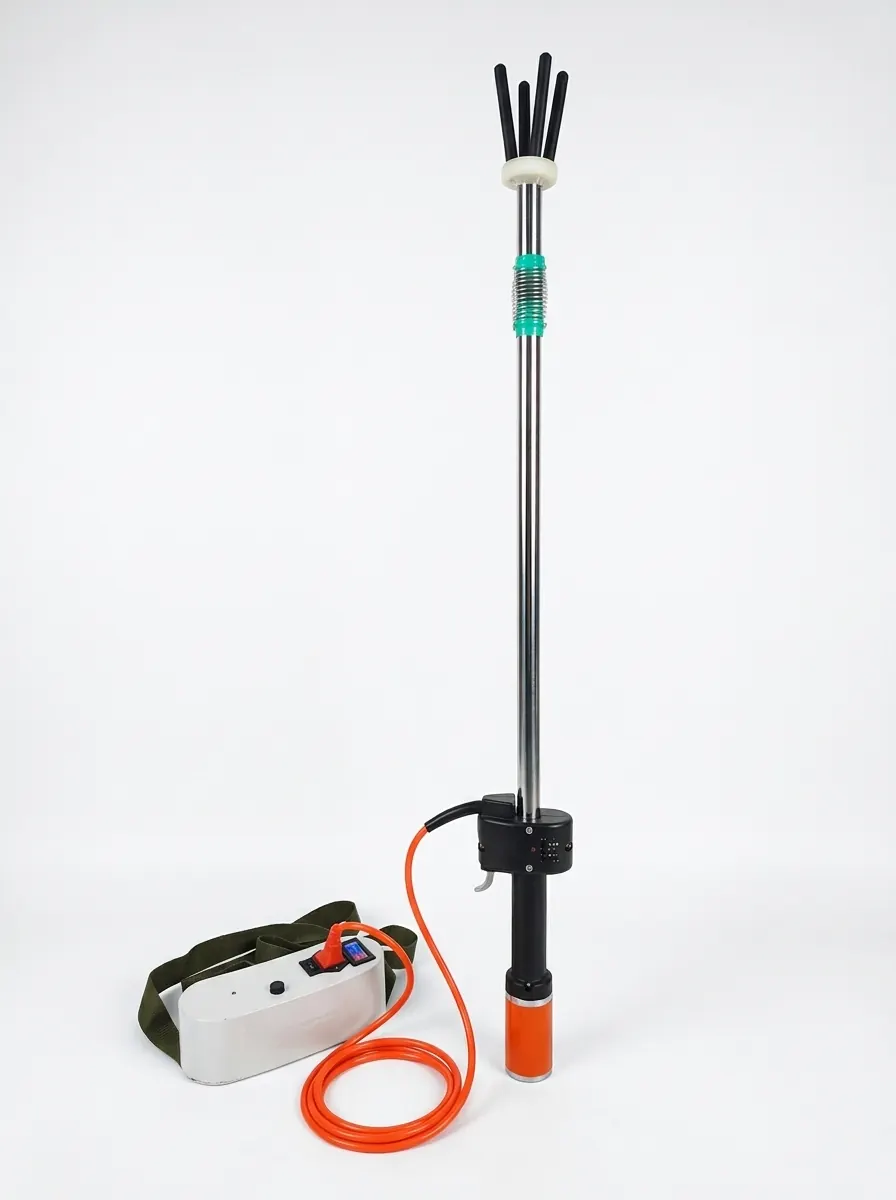
Series A — portable electric fruit picker
Standard edition: a short 1.1 m pole and a five-finger claw for shrubs and low trees.
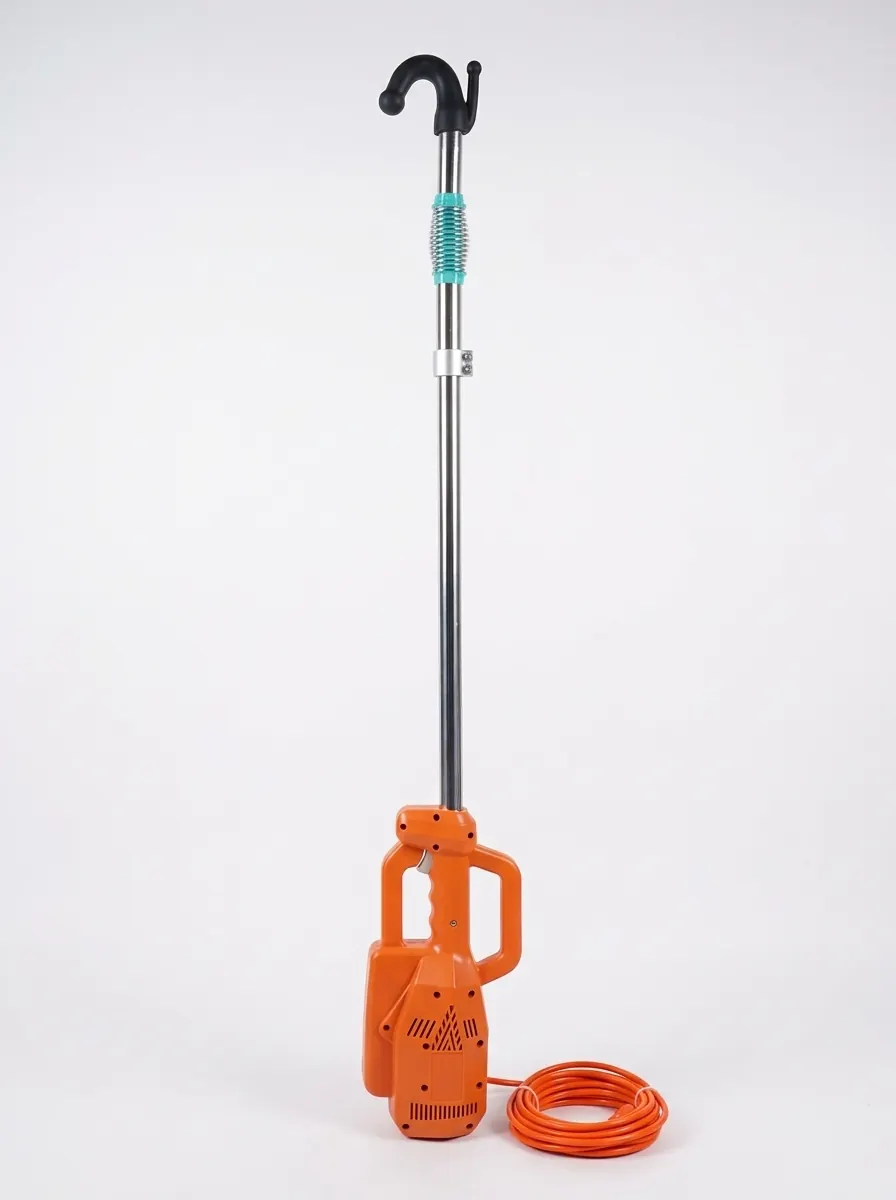
Series B — electric fruit harvester
Enhanced: a hook head and 600 W on a 1.4 or 1.8 m pole, for fruit just above your reach.
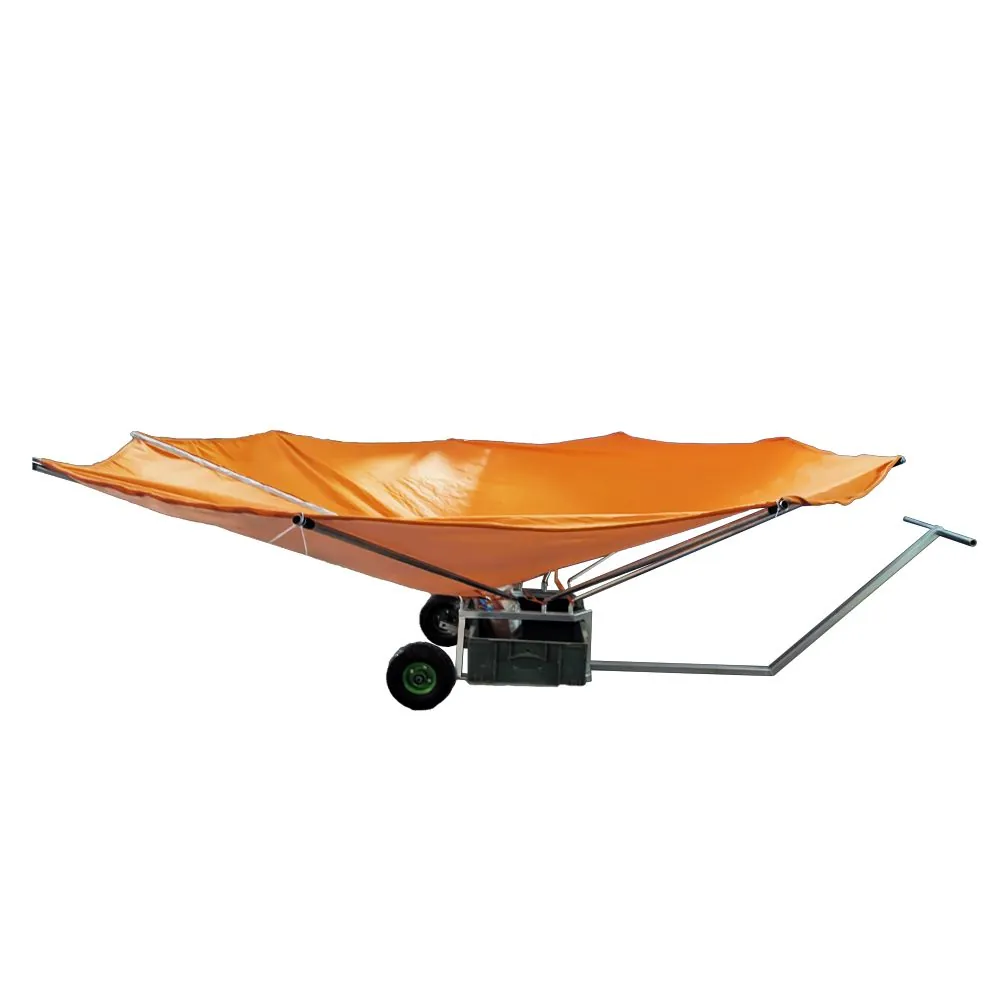
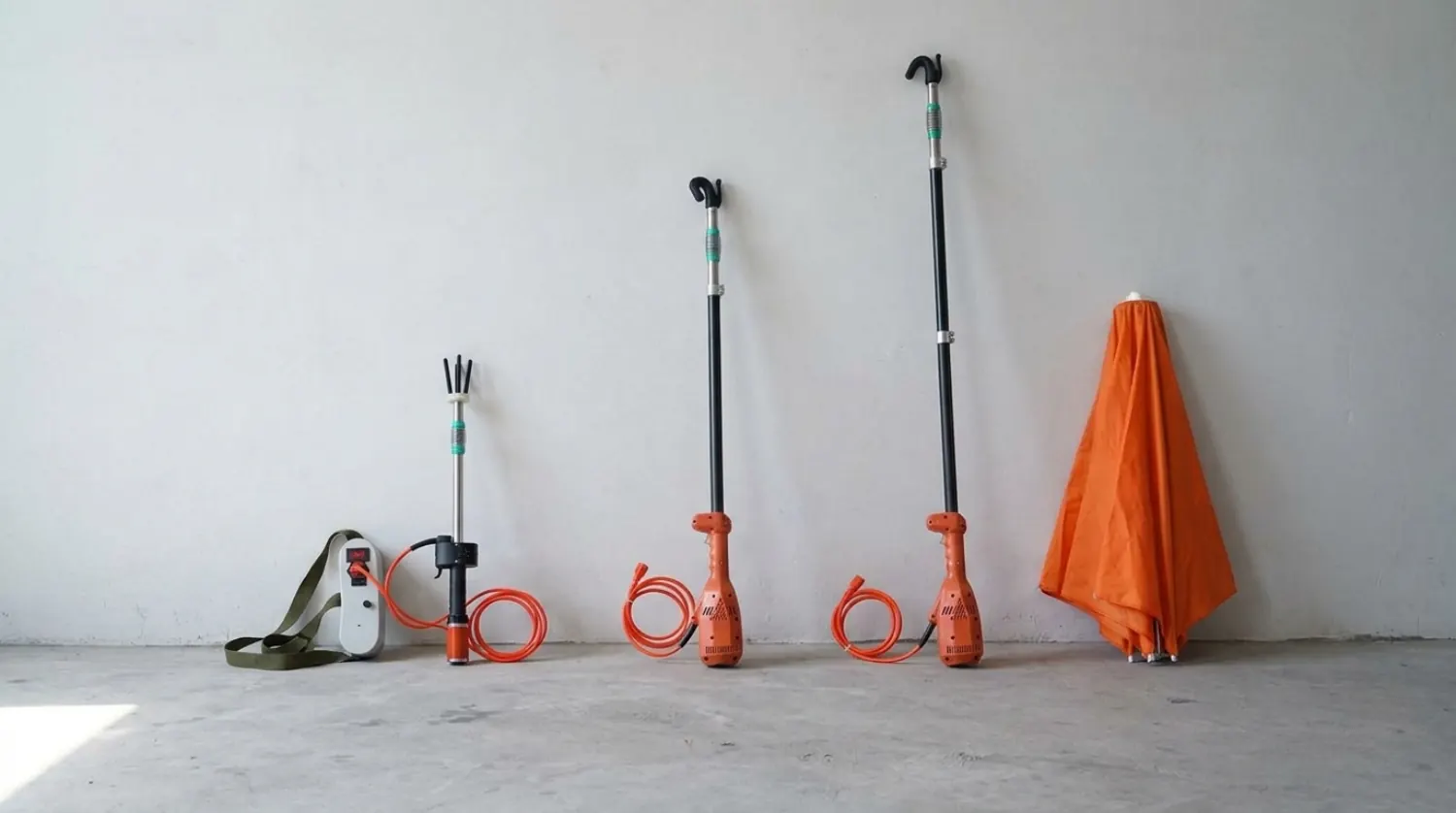
Foldable fruit collection umbrella
Opens under the tree on a wheeled carriage, so what falls never touches the soil.
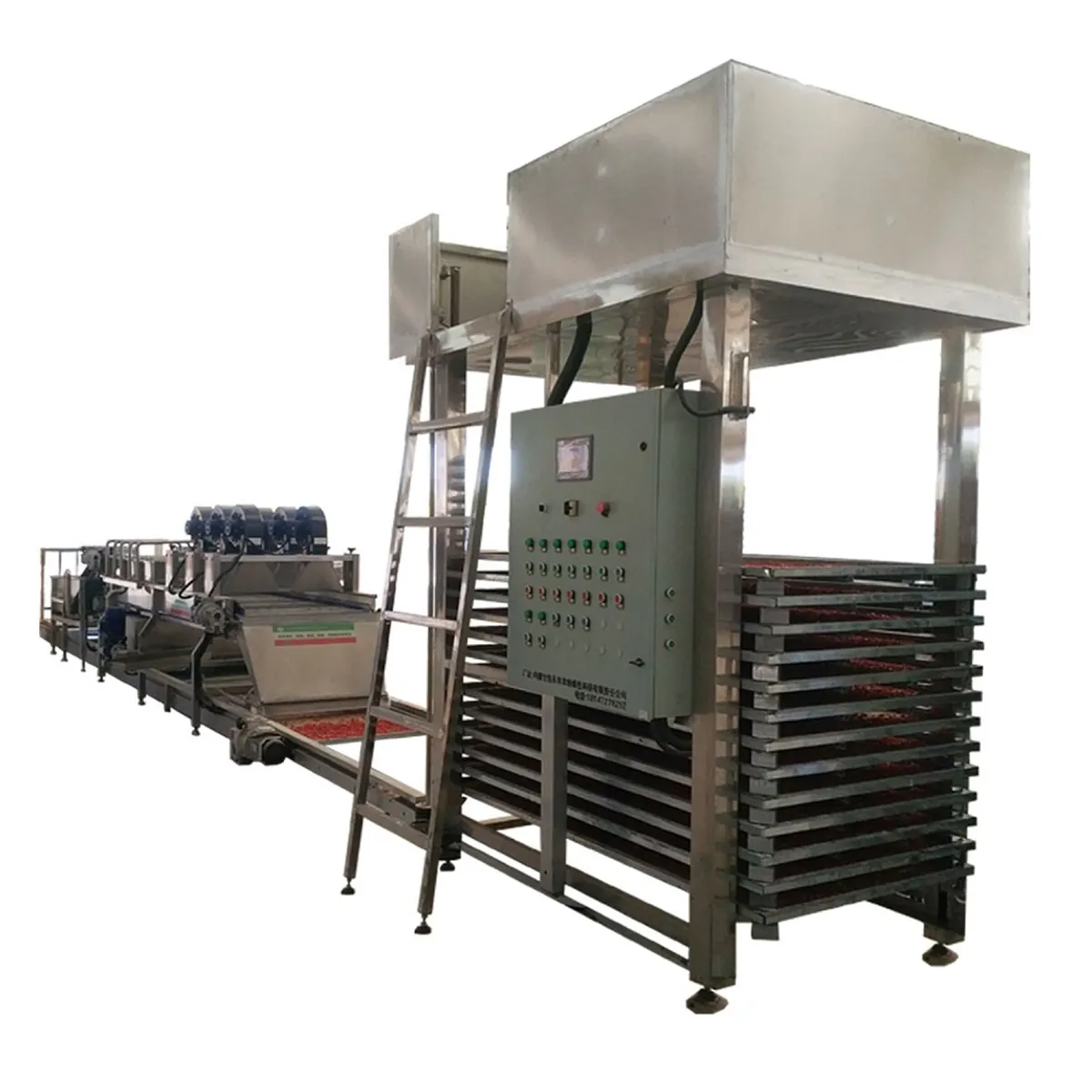
Wolfberry washing and tray-stacking line
Washing, de-waxing, tray filling and stacking in one line, built for dried wolfberry.
Service & parts
The parts that wear are the parts we keep on the shelf.
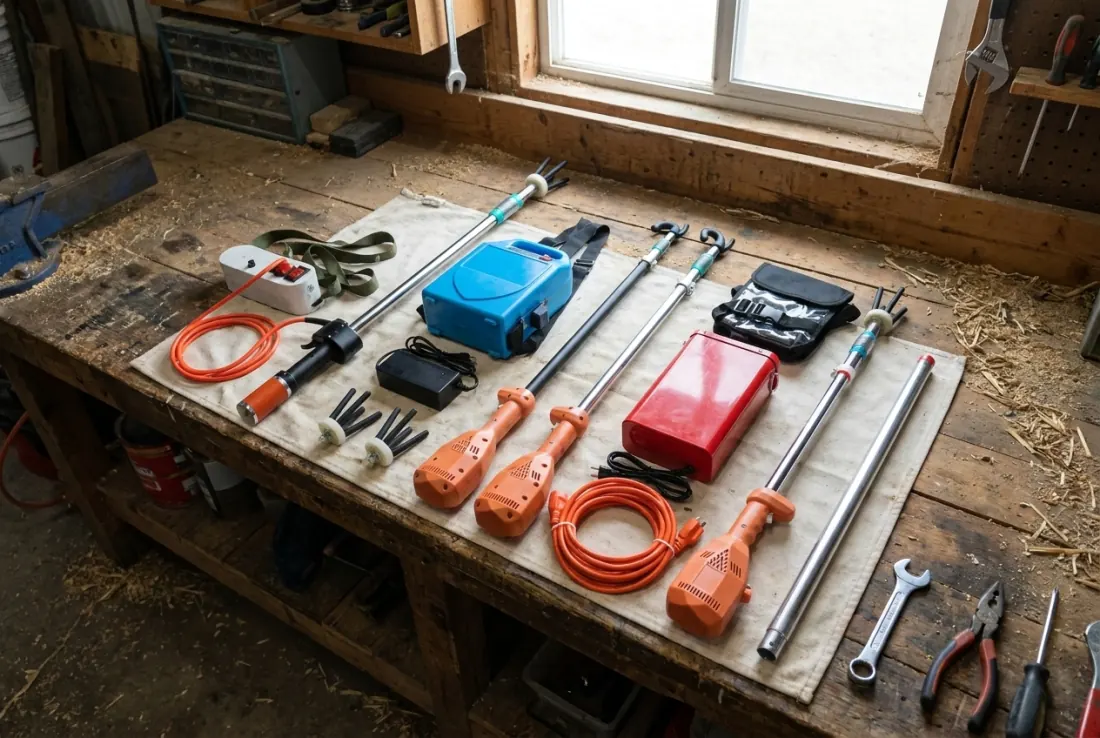
Claw heads, batteries, cables and trigger modules are the four things that wear out. We keep all four in stock, ship them by air, and send the video that shows the swap — most swaps take a single spanner and under ten minutes.
- 12-month warranty on the machine, 6 months on the collection umbrella
- Claw heads, batteries, cables and trigger modules held in stock
- Remote diagnosis by video call, in the language you write to us in
- OEM and ODM: your colour, your brand, your packaging from 50 units
- Minimum order 10 units · 15–30 days production · samples available
Tell us the crop, the tree and the ground.
Give us the crop, the tree height, the slope and what you use today. You get a straight answer on which series fits, what it will cost delivered, and the parts list — or an honest no if the crop is not one we can shake.
What we need from you
- Crop and variety
- Tree height and habit
- Slope and access
- Your current picking method