Wolfberry line·washing·de-waxing·tray filling·stacking
For wolfberry, the harvest does not end at the tree.
Wolfberry is dried, not sold fresh, and that changes what a harvest is. Between the bush and the drying rack there is washing, de-waxing, filling trays and stacking them — four jobs that are usually four groups of people. This line does all four, and it is the only product in our range that is not something you carry.
- Function
- Washing + de-waxing
- Tray filling
- Automatic
- Stacking
- Automatic
- Reference site
- Qinghai Huanghe Company
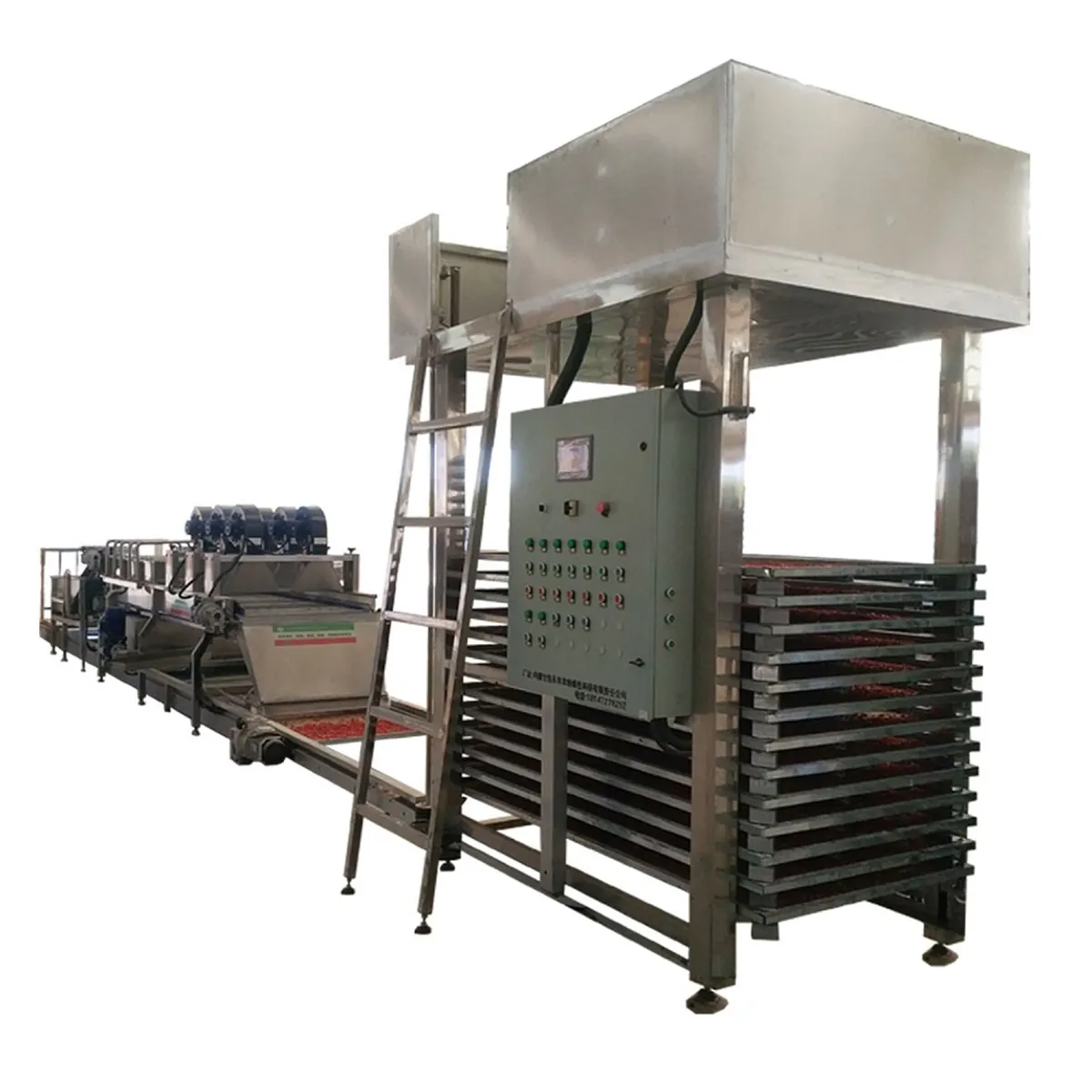
The machine
One line, end to end, from the wash tank to the tray stack.
This is a fixed line, and it should be looked at as one: the wash section at the near end, the conveyor carrying fruit through, and the tray tower at the far end where filled trays are stacked for the dryer.
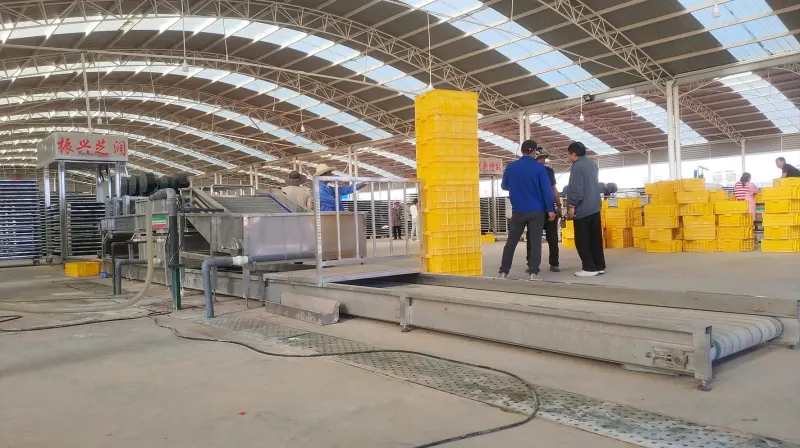
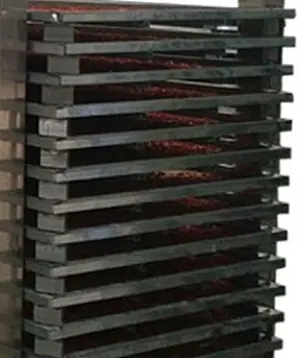
Close up
The three sections the fruit passes through.
Nothing below is a render or a mock-up. Each is cut 1:1 out of the manufacturer's own photographs of this line, so what you see is what arrives.
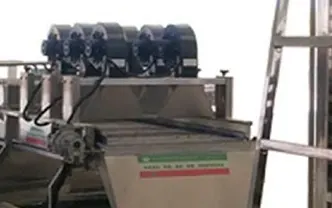
The wash and de-wax section
A bank of motors over a stainless tank: the fruit is washed and de-waxed on a mesh belt, then passed straight on to filling. De-waxing is the step that matters for drying — it is what stops the skin holding the moisture in.
Tray filling and stacking
Filled trays are stacked automatically into a tower. That is the part that replaces the most people: a full tower is wheeled to the dryer as one unit instead of being carried tray by tray.
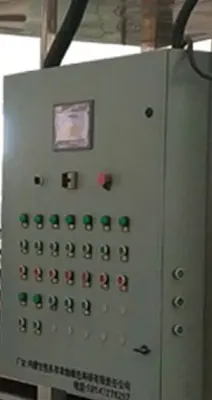
The control cabinet
A touch screen with the button rows and the emergency stop. This is where the line is set and where it stops. (The maker's own nameplate on the panel is photographed as it is on the machine — we have not retouched it.)
Who this is for
A drying operation, not a field.
Everything else we sell is carried to the tree. This one is installed in a building and the fruit comes to it, so the question is not how much land you have, but how much dried fruit you put through a day.
Wolfberry drying operations
The line was developed for dried wolfberry specifically. It was iterated in-house for years before it went into production, and it is running at Qinghai Huanghe Company.
Operations that are losing people at the tray bench
Filling and stacking trays by hand is the least skilled and hardest-to-staff work in the process. On a line, it is also the easiest part to automate — which is why it was the first part this machine took over.
Buyers who want the line to keep growing
The manufacturer's roadmap adds an automatic tray feeder, an automatic fruit tipper and an automatic bunching machine, aimed at a fully automatic line — so the sections you buy now are meant to be added to rather than replaced.
Anyone planning fresh-market wolfberry
Not this line. It is built around the drying process, from de-waxing onwards.
Where this one stops
There is no specification table for this one, and we are not going to invent one.
Every other product on this site carries the manufacturer's own specification table. This line does not have one — it appears only on the Chinese site, with a description and no figures. So there is no capacity, no footprint, no power draw and no throughput figure published anywhere for us to quote, and you should be suspicious of any site that offers you one. What does exist is a working installation. Ask us for a call or a visit and we will put you in front of the people running it.
- No published capacity, footprint, power or throughput figures. We will get them from the manufacturer for a real enquiry, but we will not estimate them here.
- It is a fixed line for one crop. It is built for wolfberry and for drying; it is not a general-purpose fruit processing line and we are not going to describe it as one.
- The automatic tray feeder, tipper and bunching machine are planned, not shipped. The manufacturer lists them as additions to the line, and until they exist we will describe them as planned.
- It is not portable and not field equipment. If you need something that goes to the bush, that is the shaker range — not this.
- This product has no page on the manufacturer's English site at all. Everything here comes from their Chinese product page plus the installation in Qinghai, and we have said so rather than filling the gaps.
The rest of the range
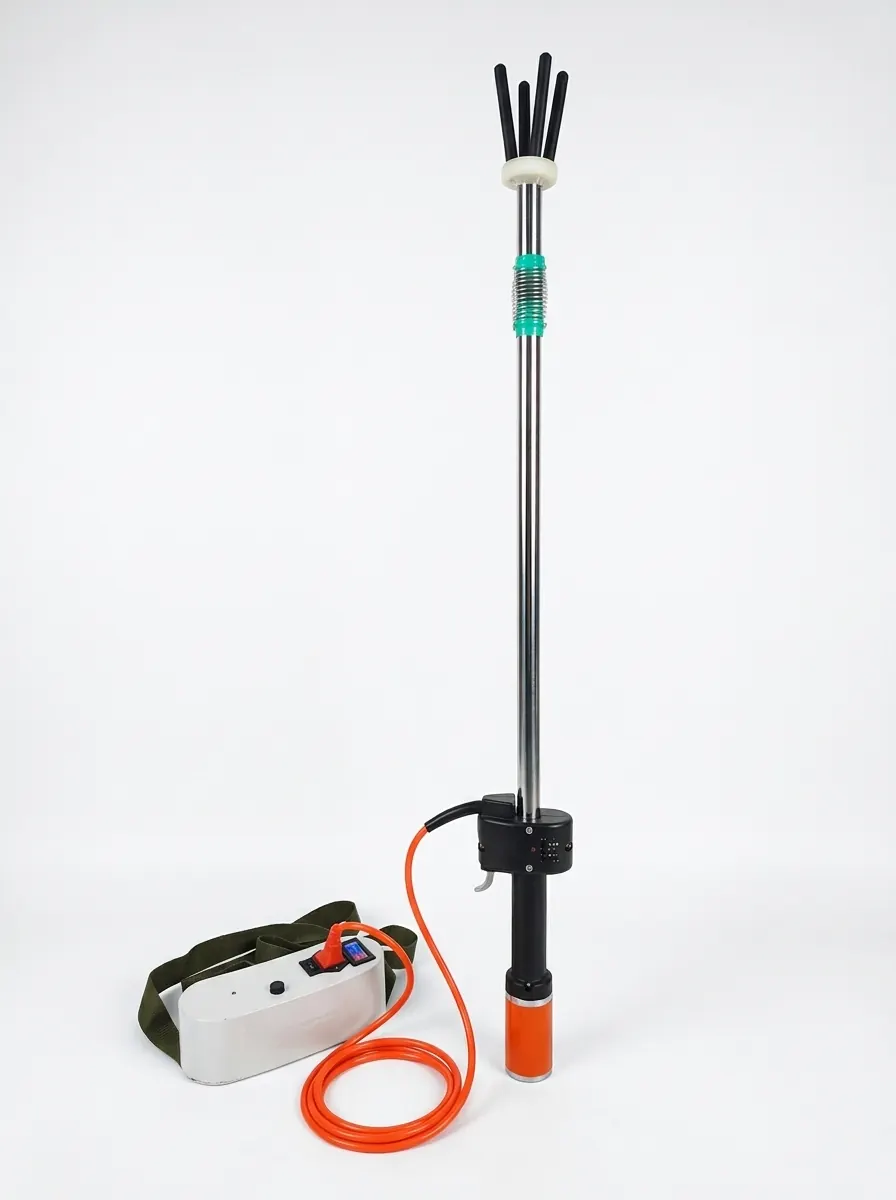
Series A — portable electric fruit picker
Standard edition: a short 1.1 m pole and a five-finger claw for shrubs and low trees.
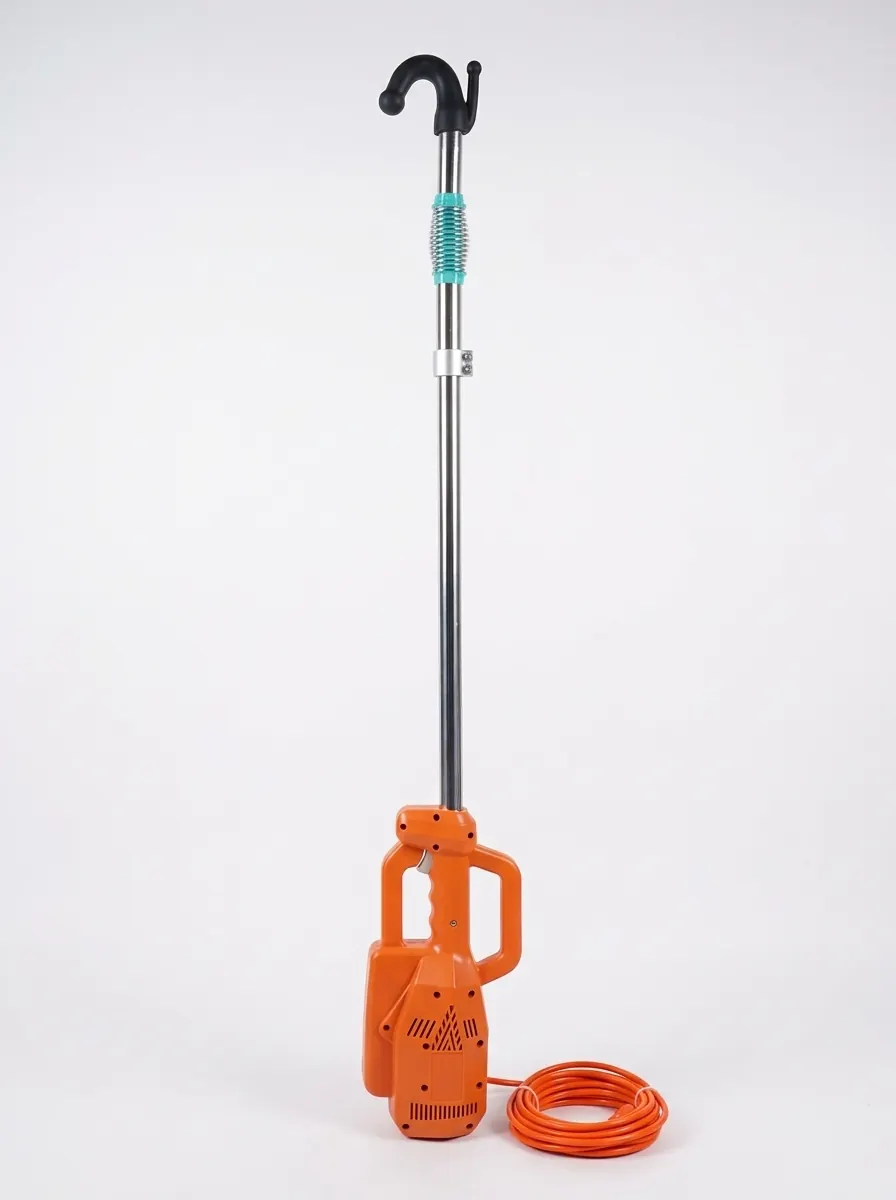
Series B — electric fruit harvester
Enhanced: a hook head and 600 W on a 1.4 or 1.8 m pole, for fruit just above your reach.
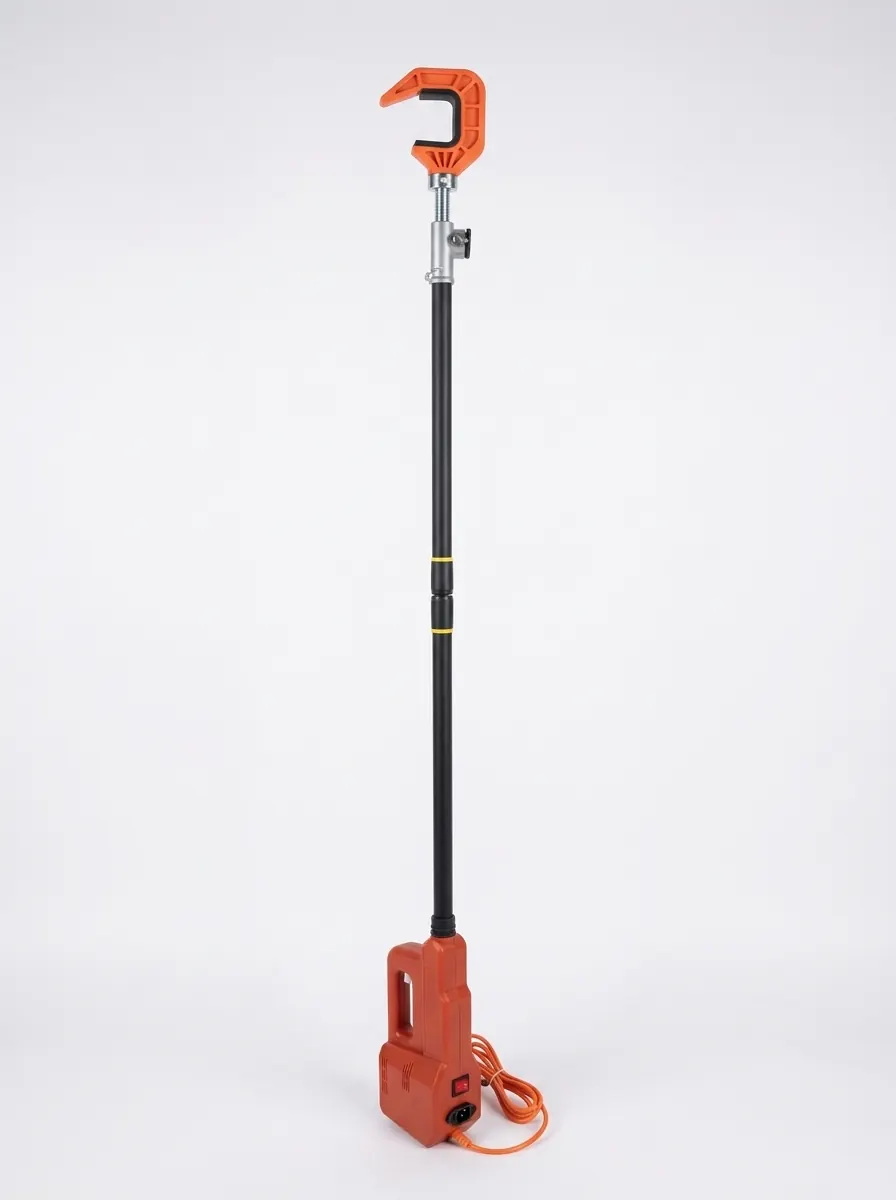
Series C — extended-reach tree shaker
Extended: jointed poles to 6 m and a C-clamp head that closes on the limb, for mature orchards.
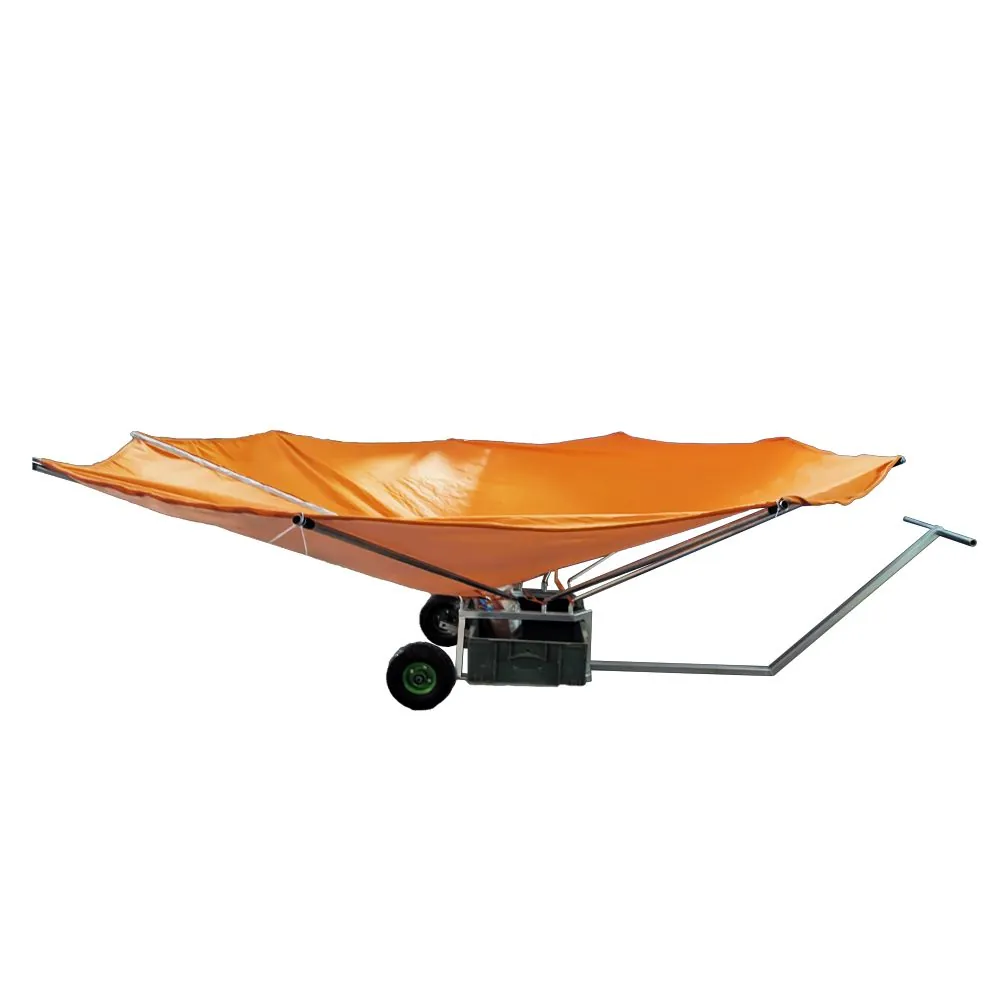
Foldable fruit collection umbrella
Opens under the tree on a wheeled carriage, so what falls never touches the soil.
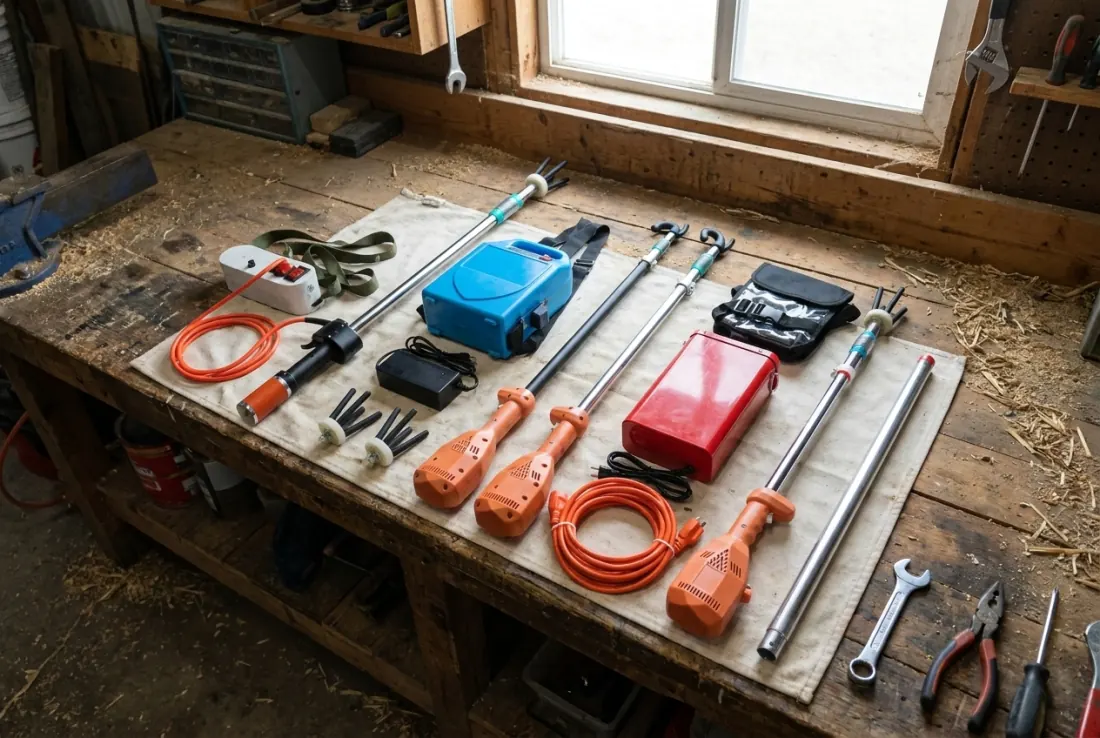
Service & parts
The parts that wear are the parts we keep on the shelf.
Claw heads, batteries, cables and trigger modules are the four things that wear out. We keep all four in stock, ship them by air, and send the video that shows the swap — most swaps take a single spanner and under ten minutes.
- 12-month warranty on the machine, 6 months on the collection umbrella
- Claw heads, batteries, cables and trigger modules held in stock
- Remote diagnosis by video call, in the language you write to us in
- OEM and ODM: your colour, your brand, your packaging from 50 units
- Minimum order 10 units · 15–30 days production · samples available
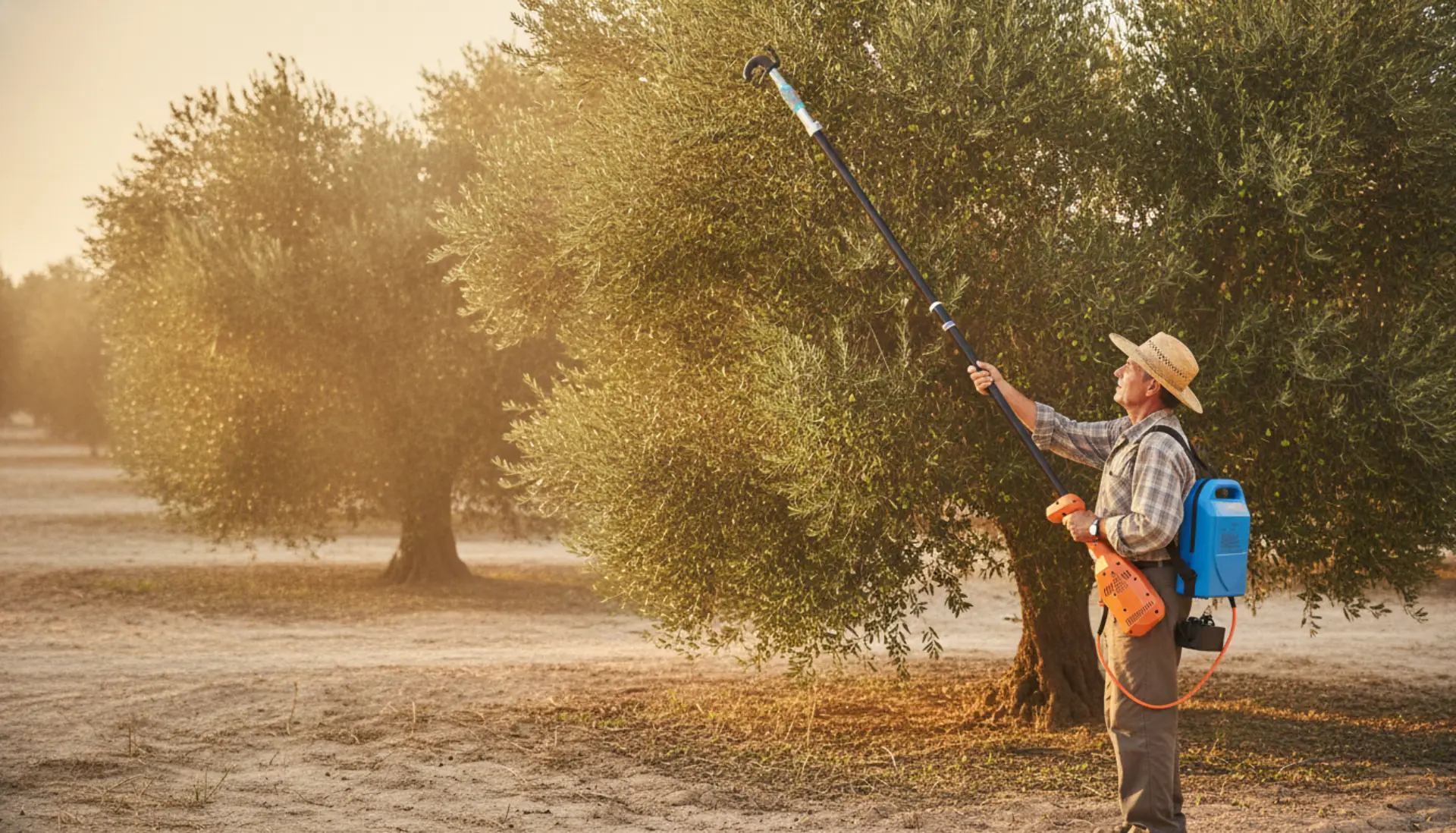
Tell us the crop, the tree and the ground.
Give us the crop, the tree height, the slope and what you use today. You get a straight answer on which series fits, what it will cost delivered, and the parts list — or an honest no if the crop is not one we can shake.
What we need from you
- Crop and variety
- Tree height and habit
- Slope and access
- Your current picking method