Cases·sites, not studios
Every photograph here was taken where the machine was working.
A winter seabuckthorn harvest, a wolfberry line in Qinghai, chestnut orchards in Hebei, an olive grove in India. Four of these have a photograph and a name. The rest are listed without one, because we would rather show you a short list than a full-looking one.
- Chinese provinces on record
- 17+Chinese provinces on record
- countries exported to
- 6+countries exported to
- growers on the machines
- 10,000+growers on the machines
- of the picking labour bill removed
- 80 %of the picking labour bill removed
Figures as published by the manufacturer; they cover all markets, not this page.
Field record
Four sites with a photograph, four more with a name.
Each entry is as specific as the record allows: the province or country, the crop, and what changed once the machines were in use. Nothing here is a composite and no customer name is used without permission — the only company ever named publicly is the one below.
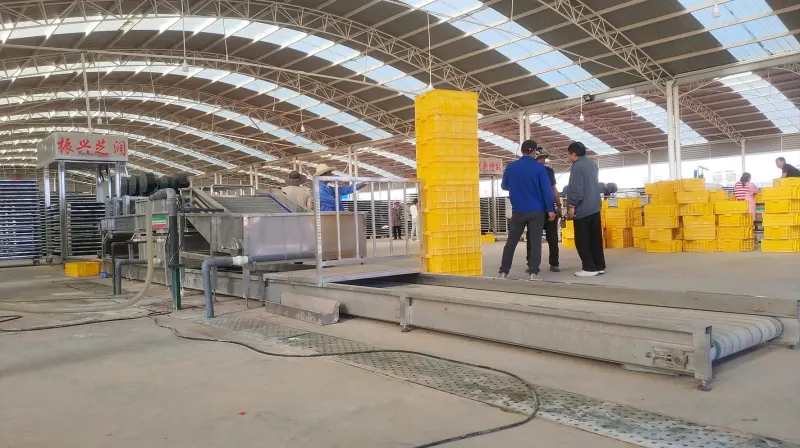
Qinghai · Ningxia · Wolfberry
Wolfberry washing and tray-stacking line
Washing, de-waxing, tray filling and tray stacking in one line, on a production drying operation at Qinghai Huanghe Company. Two of the six patents cover this line.
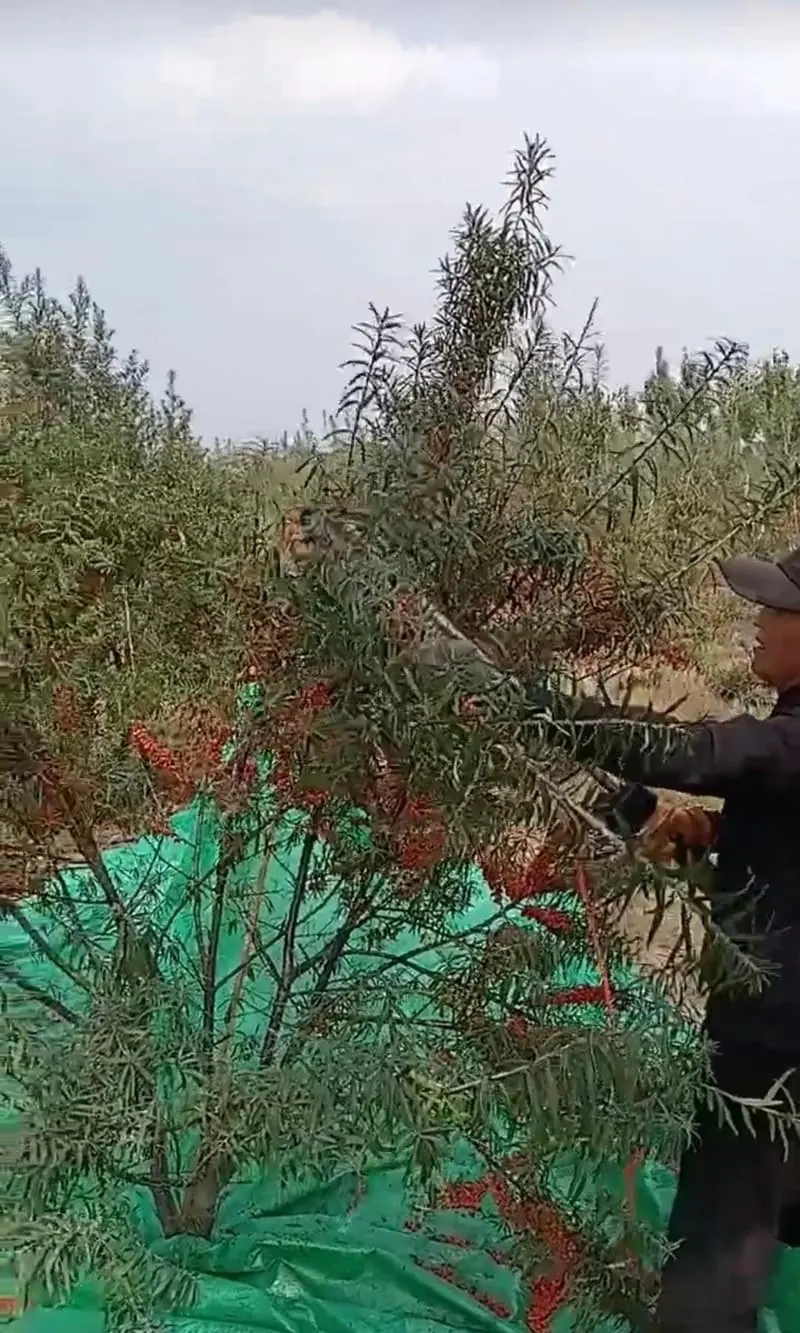
Qinghai · Seabuckthorn · winter
Winter seabuckthorn harvest
Thorny, dense, and picked in the cold. With the low-temperature pack the harvest no longer stops at −20 °C, which is what made winter seabuckthorn a machine job instead of a by-hand job.
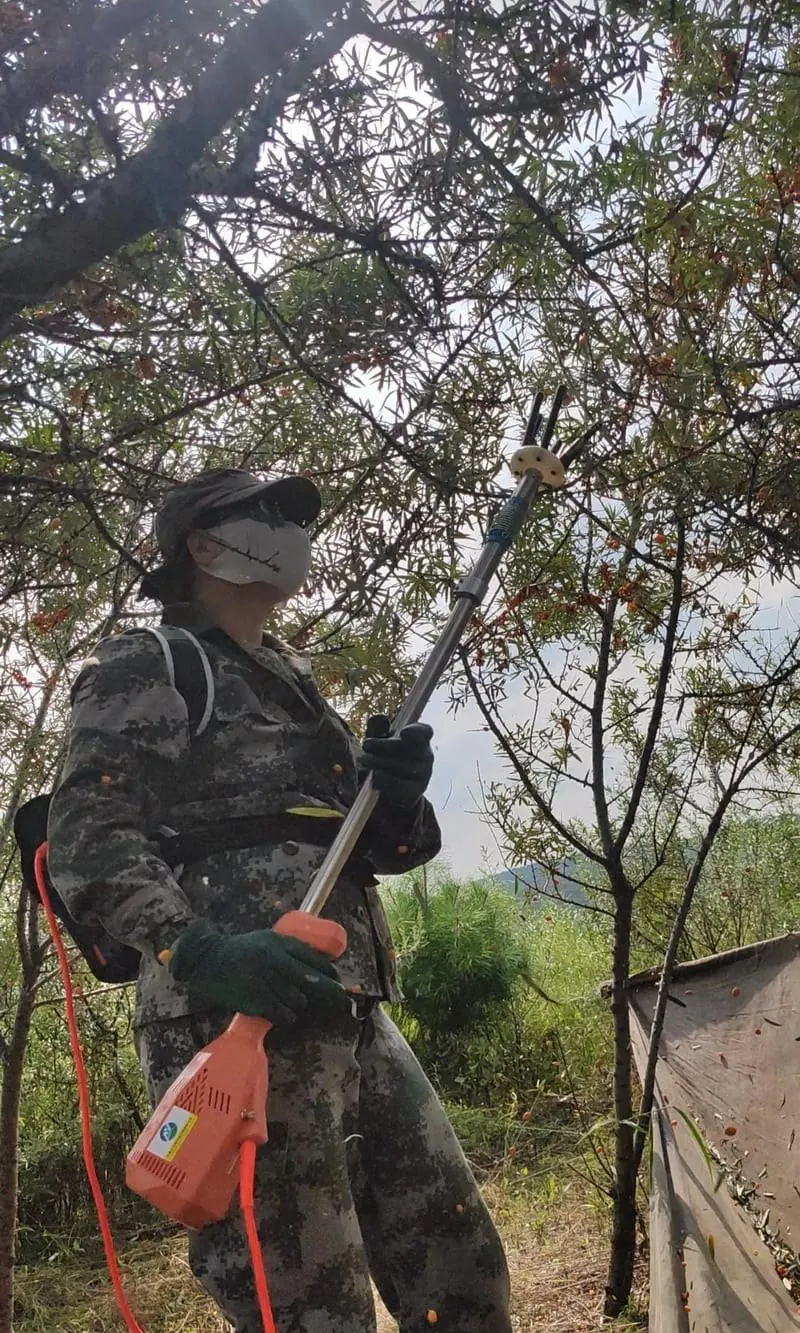
Hebei · Chestnut
Chestnut orchards in Hebei
Chestnut trees are tall and the fruit is heavy, so the harvest used to mean ladders and climbing. C Series machines with the jointed pole work the upper branches from the ground.
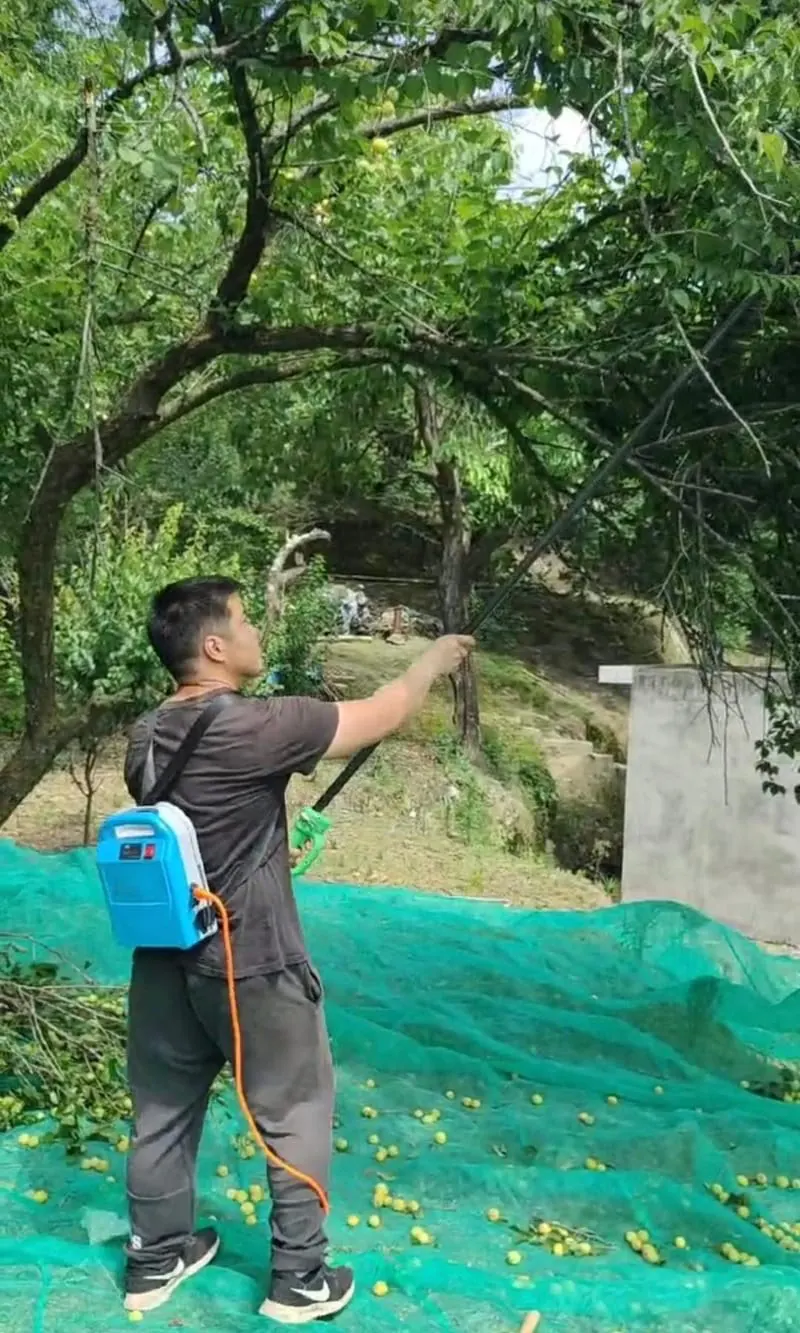
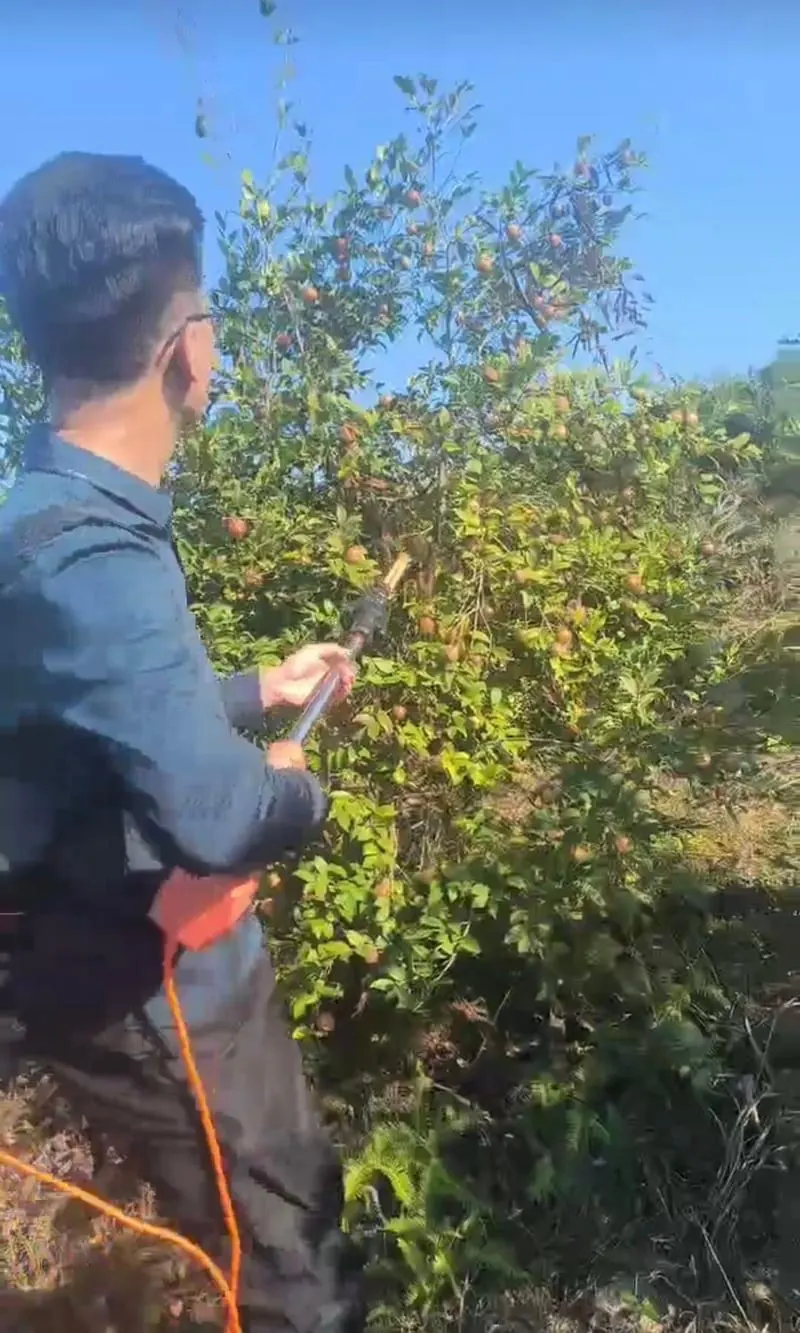
India · Olive
Olives harvested in India
Machines exported to India for olive harvesting. A different climate, a different tree habit, and a different harvest window from the olive groves the machine was first set up for — which is the point of the entry.
CCTV-17 · I Love Invention
The national broadcaster's invention programme put the machine and a hand-picking team into the same orchard and timed both on camera. 《巧手摘沙棘》, 6 October 2021.
Watch the episode on cctv.comVideo
Watch it work before you talk to us.
Four clips from the field: the machine in an olive orchard, on seabuckthorn, a straight demonstration, and one of our customers explaining what changed on his farm.
Recorded, but not photographed
We have these on the record without a photograph we can publish. They are still real references — ask and we will say what we know.
- Ningxia · wolfberry — large plantations on B Series machines, 5–8× the fruit per picker and about 80 % off the labour bill
- Henan · cornel and wild jujube — A and B Series machines replacing hand picking for thousands of households
- Mongolia · seabuckthorn — machines deployed on a local agricultural development programme
- Northeast China · honeyberry — a berry region where the picking window is short and cold
What is not on this page
The regions we have no case for are the ones we will not illustrate.
Only two export countries are named anywhere on our own materials — India and Mongolia. If your country or your crop is not above, the honest answer is that we may have no case there, and it would be easy to fill this page with a stock orchard instead. Tell us the crop and the country: you will get either a reference or a straight no.
- No customer name is published anywhere except the one above
- No case is written for a region that is not on the record — not even as an illustration
- Photographs of one site are never captioned as another
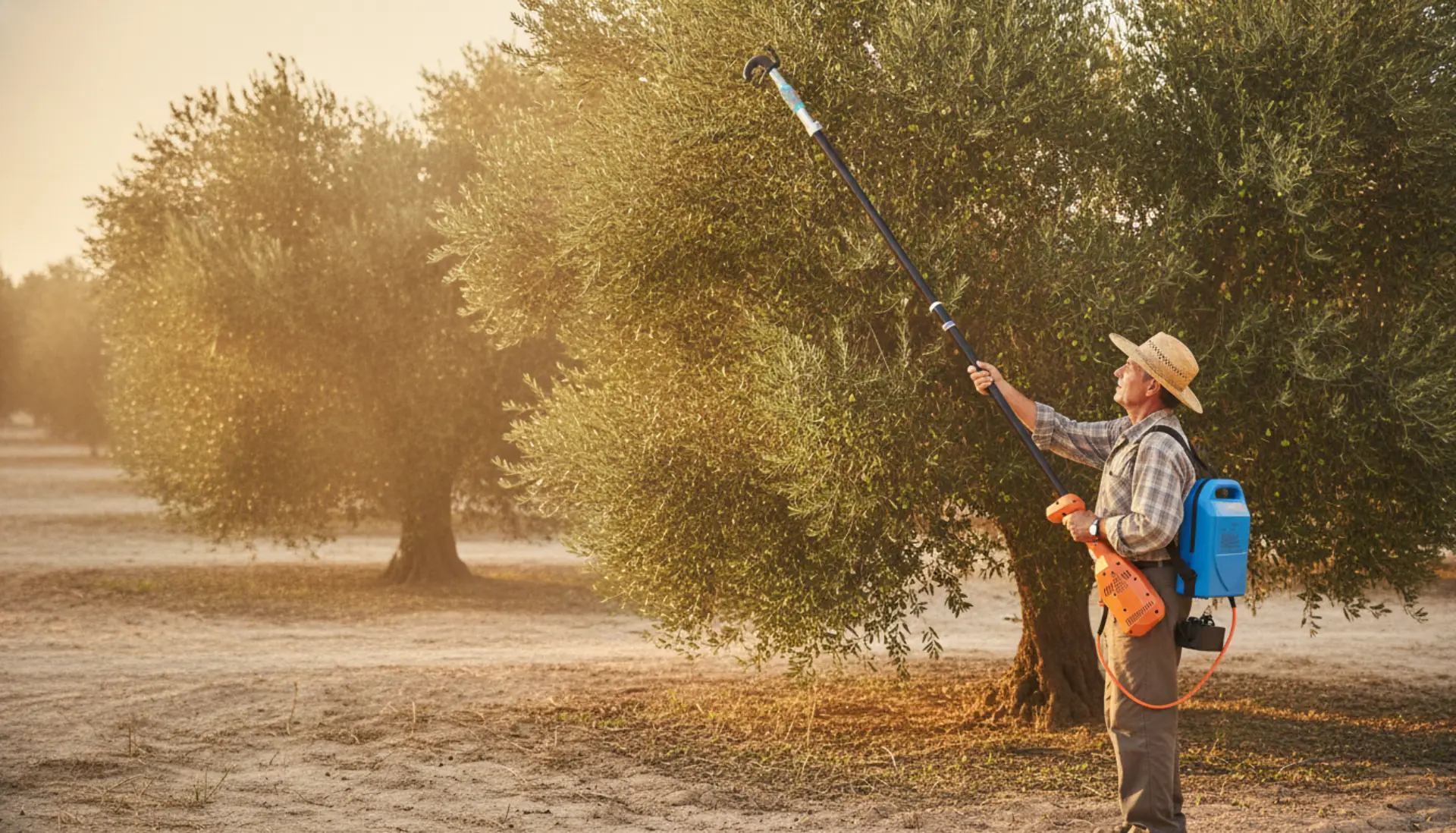
Tell us the crop, the tree and the ground.
Give us the crop, the tree height, the slope and what you use today. You get a straight answer on which series fits, what it will cost delivered, and the parts list — or an honest no if the crop is not one we can shake.
What we need from you
- Crop and variety
- Tree height and habit
- Slope and access
- Your current picking method